Butylethylpropanediol
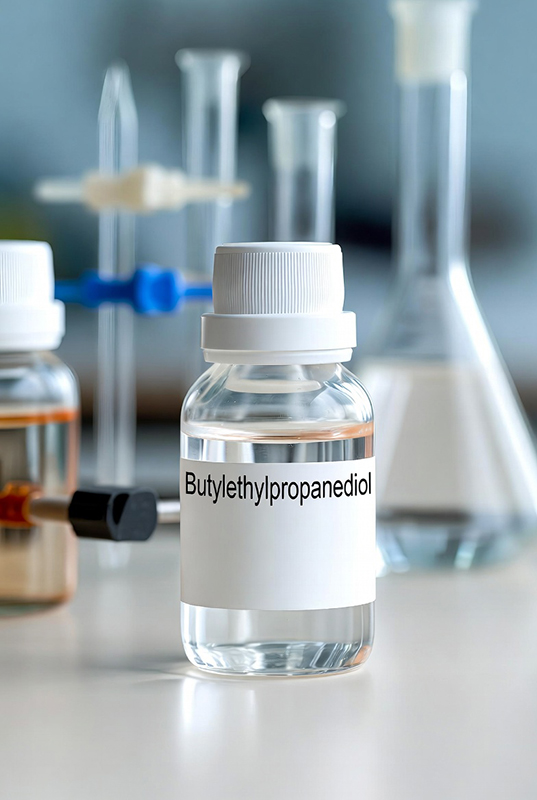
Abbreviation: BEPD, EBP, BEPG
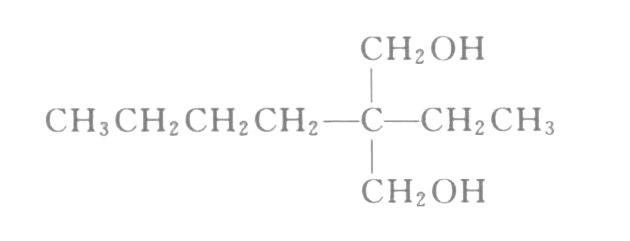
Chemical Name: 2-Butyl-2-ethyl-1,3-propanediol
Synonyms: Ethylbutylpropanediol
Molecular Formula: C9H20O2
Molecular Weight: 160.3
CAS Number: 115-84-4
EINECS Number: 204-111-7
Structural Formula:
Physicochemical Properties
White or slightly yellow solid at room temperature, melting point: 42–44℃. Slightly soluble in water, n-octanol/water partition coefficient 1gPow = 2.17.
Perstorp’s butyl ethyl propylene glycol comes in two specifications: one is a white crystalline solid or molten product containing over 99% butyl ethyl propylene glycol, with an acidity (based on acetic acid) ≤0.01%, color (liquid APHA) ≤30, and moisture ≤0.1%; the other is a liquid mixture containing (70±1)% butyl ethyl propylene glycol, (25±1)% neopentyl glycol, and (5±1)% water, and is a colorless and transparent liquid.
Properties and Uses
Butyl ethyl propylene glycol is a special sterically hindered diol containing two primary hydroxyl groups. It improves hydrolytic stability and resistance to detergent corrosion, as well as improving solubility and reducing crystallinity. It is used in the manufacture of saturated polyester resins, polyester polyols, polyurethane coatings, elastomers, etc., for powder coatings, coil coatings, and other baked enamels; unsaturated polyester resins, solvent-based and water-based short-oil alkyd resins, etc., for gelcoat coatings, etc.
Toxicity
Butylethylpropanediol has very low toxicity. The acute oral LD50 in rats is 3536 or 5040 mg/kg, and the dermal LD50 in rabbits is 3810 mg/kg. It is non-irritating to the skin and eyes.
PREVIOUS:Tripropylene glycol
NEXT:Diethylpentanediol
CATEGORIES
LATEST NEWS
- Polyether Polyol vs Polyest...
- What Is Polyester Polyol?
- What Is Polyether Polyol?
- What Is Polyol?
- Why Is Reaction Balance Cri...
- Blowing Reaction vs Gelling...
- How Molecular Structure Det...
- Soft Segment vs Hard Segmen...
- What Is Crosslinking in Pol...
- What Is Polyurethane Polyme...
CONTACT US
Tel:+86 18688691634
Email:sam@1688pu.com
Add:No. 91 Central East Rd, Luxi Village, Gaobu Town, Dongguan 523283, China.