Polyether Triols
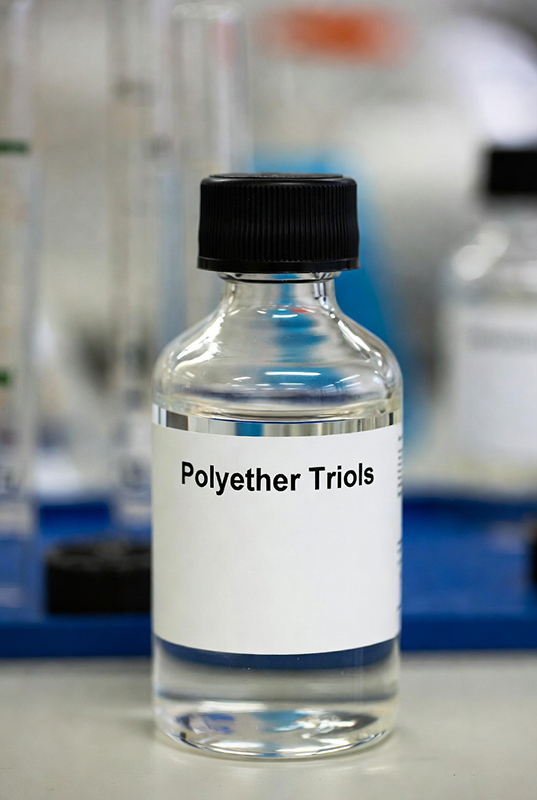
The polyether triols commonly used in the polyurethane industry are polypropylene oxide triols and propylene oxide-ethylene oxide copolymer triols, with a small amount of polyethylene oxide triol products also being used.
Polypropylene oxide triol is also known as poly(propylene glycol) triol or trihydroxy polypropylene ether.
The initiators used to synthesize polyether triols include glycerol, trimethylolpropane, ethanolamine, diethanolamine, and triethanolamine.
Polyether triols come in many varieties, with hydroxyl values ranging from 25 to 550 mg KOH/g, and are used in different fields.
In the soft polyurethane foam manufacturing industry, the most widely used polyether triols are polypropylene oxide triols and propylene oxide-ethylene oxide triols with a nominal molecular weight of 3000. Representative grades of polyether polyols produced by the polymerization of glycerol and propylene oxide include MN-3050, 3030, 3000, N-330, and Caradol SC 5601; polyether triols produced by the copolymerization of glycerol with propylene oxide and a small amount of ethylene oxide (10%–15%) have improved activity and water solubility, increasing the tolerance of the stannous octoate catalyst and thus stably improving the success rate of foaming. Representative grades include Voranol 3010, 3031, 3050E, Caradol SC 5602, Arcol 5613, ZS-2802, 530, 350, 553, and GEP-560S. Ethylene oxide-propylene oxide random or block copolymer triols are widely used in the production of soft and semi-rigid polyurethane foams.
Polyether triols with a high primary hydroxyl content and a molecular weight of 3000–3500 have high activity and are used in hot-molded polyurethane foams. High-activity polyether triols will be specifically introduced in the “High-Activity Polyethers” section. Most polyether triols with hydroxyl values in the range of 200–550 mg KOH/g are synthesized from glycerol and propylene oxide and are used in rigid and semi-rigid polyurethane foams.
Physical and Chemical Properties
Colorless or light yellow transparent oily liquid. The relative density of typical flexible foam polyether triols is slightly greater than 1.00, and polyethers with high EO content have slightly higher densities. Polypropylene oxide triols are insoluble in water, while polyether triols containing a small amount of ethylene oxide are slightly soluble in water, and those containing a larger amount of ethylene oxide are soluble in water. The theoretical hydroxyl functionality of these polyethers is 3, while the actual functionality is between 2.5 and 3.
Characteristics and Uses
Polyether triols are important raw materials for polyurethane foams, elastomers, waterproof coatings, adhesives, and sealants.
Polyurethane flexible and rigid foams have different requirements for the molecular weight or hydroxyl value of the polyether. Polyether polyols used in flexible foams are generally long-chain, low-functionality polyethers with a molecular weight of approximately 3000, i.e., a hydroxyl value of about 56 mg KOH/g. Rigid foams typically require polyethers with a molecular weight in the range of 300–400 and a hydroxyl value of 450–550 mg KOH/g.
PREVIOUS:Polyether Diol
CATEGORIES
LATEST NEWS
- Polyether Polyol vs Polyest...
- What Is Polyester Polyol?
- What Is Polyether Polyol?
- What Is Polyol?
- Why Is Reaction Balance Cri...
- Blowing Reaction vs Gelling...
- How Molecular Structure Det...
- Soft Segment vs Hard Segmen...
- What Is Crosslinking in Pol...
- What Is Polyurethane Polyme...
CONTACT US
Tel:+86 18688691634
Email:sam@1688pu.com
Add:No. 91 Central East Rd, Luxi Village, Gaobu Town, Dongguan 523283, China.