High-Activity Polyethers
Generally speaking, any copolymer polyether polyol with a high primary hydroxyl content, including polyether triols, polyether diols, and polyether tetrols, can be called “high-activity polyethers.” Polypropylene oxide-ethylene oxide copolymer triols with molecular weights of 4500-6500 are the most commonly used in industry, with a primary hydroxyl content of 70%-90% and a total ethylene oxide chain mass fraction of 10%-20%. In addition, high-activity polyethers with a molecular weight of 3000 are also used in the production of polyurethane flexible foams. High-activity polyether diols and high-activity polyether tetrols are also available.
Physicochemical Properties
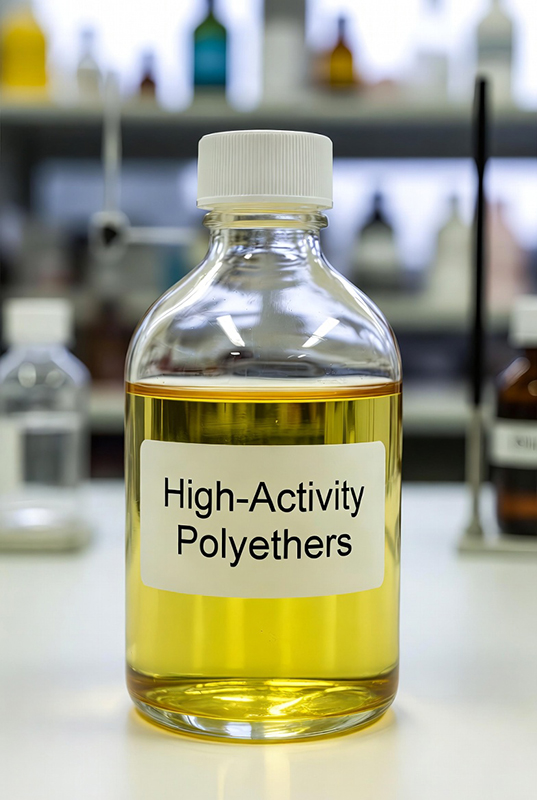
High-activity polyethers are colorless to light yellow transparent viscous liquids.
Characteristics and Uses
Due to the incorporation of polyoxyethylene groups into the polypropylene oxide chain during the synthesis of these polyethers, the compatibility of the polyether polyol with water and diisocyanates is greatly improved.
High-activity polyethers contain a large number of primary hydroxyl groups, which are more reactive than the secondary hydroxyl groups in ordinary polypropylene oxide polyols. They react faster with isocyanates and are mainly used in rapid molding processes for foamed plastics, such as cold-curing high-resilience foam production processes, reaction injection molding (RIM) processes, and integral skin polyurethane semi-rigid foam molding processes. Applications of high-activity polyethers include: high-resilience polyurethane molded foam cushions and backrests, integral skin semi-rigid foam steering wheels, instrument panels, and armrests for automobiles, RIM microporous elastomer shoe soles and car bumpers, and polyurethane sealants.
PREVIOUS:Polyether Triols
NEXT:Polyether Tetrol
CATEGORIES
LATEST NEWS
- Polyether Polyol vs Polyest...
- What Is Polyester Polyol?
- What Is Polyether Polyol?
- What Is Polyol?
- Why Is Reaction Balance Cri...
- Blowing Reaction vs Gelling...
- How Molecular Structure Det...
- Soft Segment vs Hard Segmen...
- What Is Crosslinking in Pol...
- What Is Polyurethane Polyme...
CONTACT US
Tel:+86 18688691634
Email:sam@1688pu.com
Add:No. 91 Central East Rd, Luxi Village, Gaobu Town, Dongguan 523283, China.