Polyether Tetrol
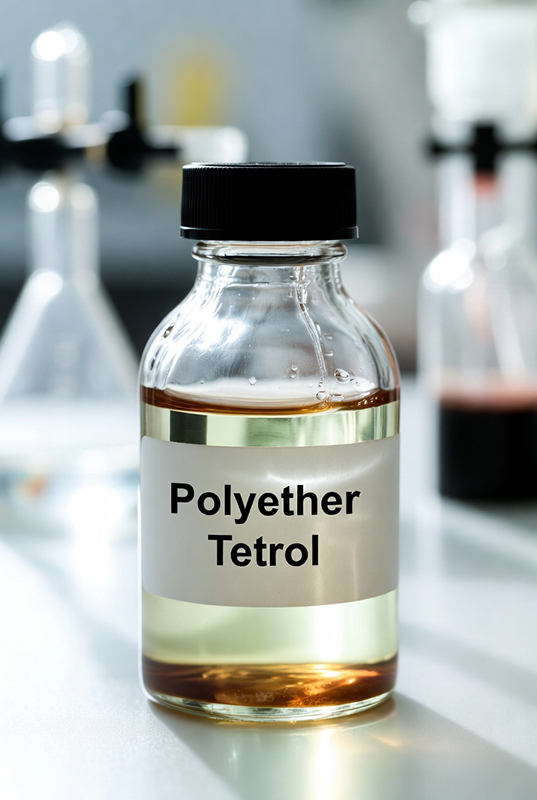
Also known as: Tetrahydroxy polyether.
Depending on the initiator used, polyoxypropylene tetrol (tetrahydroxy polyether) typically includes ethylenediamine-based polyether polyols, pentaerythritol-based polyether polyols, and toluenediamine polyether polyols.
(1) Tertiary Amine Polyether Tetrol: Polyether tetrol is synthesized using diamine compounds such as ethylenediamine, toluenediamine, diaminodiphenylmethane (methylenedianiline), and m-xylenediamine as initiators, containing tertiary amine groups. Ethylenediamine polyether, also known as ethylenediamine-based polyether tetrol, is the most common, commonly called “amine ether”.
Ethylenediamine polyether polyol is an ethylenediamine-alkylene oxide adduct, including propoxylated ethylenediamine polyol, ethoxylated and propoxylated ethylenediamine polyol, and ethylenediamine-ethylene oxide adduct, etc.
The structural formula of ethylenediamine polyoxypropylene polyol is as follows:
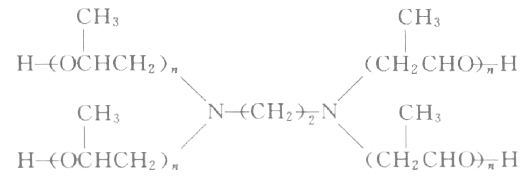
Tertiary amine polyether tetrol is generally a pale yellow transparent to brown, highly viscous liquid with alkaline properties. Ethylenediamine polyether is generally soluble in water. Most ethylenediamine-based polyether tetrols have high viscosity and are generally slightly darker in color, being light amber. A low-viscosity EO-containing ethylenediamine polyether tetrol with a hydroxyl value of 440-460 mg KOH/g (brand name TAE-305) has a viscosity (25℃) of 700-1200 mPa·s.
The most common ethylenediamine polyether tetrol is a low molecular weight polyether with a molecular weight of approximately 300, commonly known as 403 polyether. There are also other molecular weight specifications of ethylenediamine polyether tetrol, such as ethylene oxide-modified ethylenediamine polyether tetrol 405E.
(2) Pentaerythritol Polyether Tetrol. The structural formula of pentaerythritol polyoxypropylene tetraol is as follows:
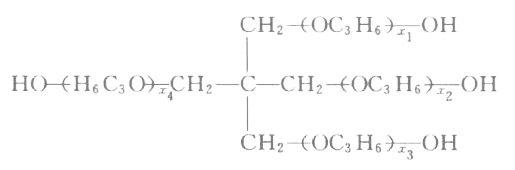
Pentaerythritol polyether tetraol is a colorless to light yellow, medium-to-low viscosity liquid.
Polyether tetraol products based on pentaerythritol as an initiator include two types: one is a higher molecular weight polyether tetraol used in high-resilience molded flexible foams; the other is a low molecular weight, high hydroxyl value rigid foam polyether.
The viscosity of pentaerythritol polyether with molecular weights of 400, 500, and 600 (hydroxyl values of 560 mg KOH/g, 448 mg KOH/g, and 374 mg KOH/g, respectively) is approximately 2800 Pa·s, 1500 Pa·s, and 1140 mPa·s, respectively.
Characteristics and Uses
Ethylenediamine polyether polyol has a certain alkalinity, thus accelerating the reaction rate with isocyanates. It is widely used in rigid foam in-situ spraying formulations as a polyol raw material with catalytic properties. Rigid polyurethane foams prepared from this polyether polyol exhibit good dimensional stability.
Low molecular weight, high hydroxyl value pentaerythritol polyether polyol is mainly used in general rigid foam formulations. Because the functionality of pentaerythritol polyether is greater than that of trihydroxyl polyether, the resulting rigid foam has better heat resistance and dimensional stability; high molecular weight pentaerythritol-based polyether polyol is used in molded flexible foams.
Low molecular weight polyether tetraol is also used in polyurethane adhesives, coatings, and other fields.
PREVIOUS:High-Activity Polyethers
CATEGORIES
LATEST NEWS
- Polyether Polyol vs Polyest...
- What Is Polyester Polyol?
- What Is Polyether Polyol?
- What Is Polyol?
- Why Is Reaction Balance Cri...
- Blowing Reaction vs Gelling...
- How Molecular Structure Det...
- Soft Segment vs Hard Segmen...
- What Is Crosslinking in Pol...
- What Is Polyurethane Polyme...
CONTACT US
Tel:+86 18688691634
Email:sam@1688pu.com
Add:No. 91 Central East Rd, Luxi Village, Gaobu Town, Dongguan 523283, China.