Polyurea Polyol
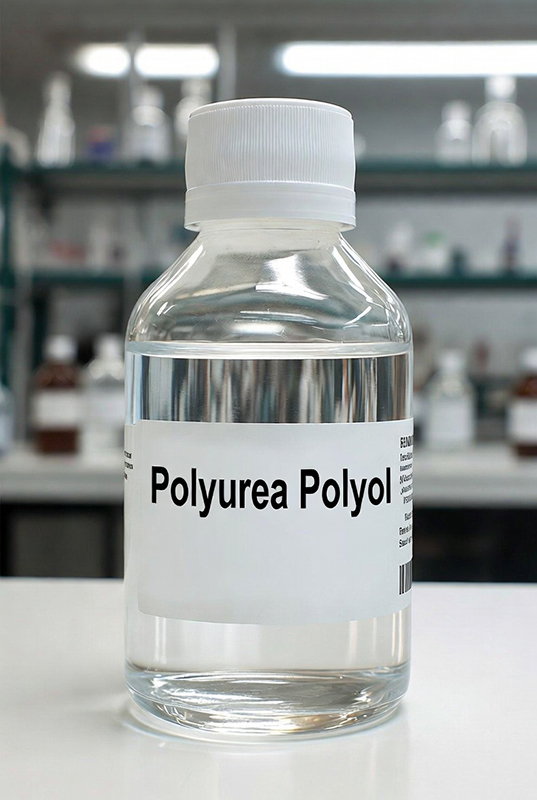
Polyurea particles are formed by the reaction of diamine or hydrazine with diisocyanate in a polyether polyol, and these particles are dispersed in the polyether, forming polyurea polyol (also known as “PHD dispersion” in German and Chinese). It is essentially a polymer-modified polyol. Like ordinary polymer polyols, polyurea polyols are used to improve the load-bearing capacity of plastics. During the formation of polyurea, some of the terminal isocyanate groups on the urea chains combine with the hydroxyl groups of the polyether to form a urea-urethane copolymer. Therefore, polyurea-modified polyols contain three structures: unmodified polyether, polyurea dispersion, and urea-urethane polymer.
The steps for preparing polyurea polyol by in-situ stepwise polymerization of hydrazine and TDI in a polyether polyol are as follows: First, the polyol with a high primary hydroxyl content is heated and mixed with an aqueous hydrazine solution under stirring. TDI equivalent to the amount of hydrazine is added, and the mixture is refluxed using the heat of reaction. The reactor is then cooled, and excess water is removed. The solid content of the polyurea polyol (the ratio of TDI and hydrazine in the polyol) is generally 20%.
The most commonly used base polyether for synthesizing polyurea polyols is a highly reactive polyether polyol with a functionality of 3, a hydroxyl value of approximately 34 mg KOH/g, and a primary hydroxyl molar fraction greater than 70%. Literature also mentions the use of polyester polyols as the base polyol. Ethylenediamine, hexamethylenediamine, p-phenylenediamine, hydrazine, N,N’-dimethylhydrazine, and their hydrates can be used to synthesize polyurea polyols; hydrazine hydrate is commonly used in industrial production. Because the density of polyurea particles is greater than that of polyether, to prevent sedimentation during storage, the isocyanate can be slightly in excess of the amino groups during synthesis, forming a partial urea-urethane copolymer, which acts as a stabilizer.
Polyurea polyols can be prepared using batch or continuous methods. Most industrially produced polyurea polyols abroad are manufactured using continuous methods. Typical products include Multranol 9151, E-9154, and E-9128 (formerly Multranol E-9151 from Mobay Chemical Company, now owned by Bayer MaterialScience).
Polyurea polyols can be used in high-resilience flexible foams, semi-rigid foams, flexible foams, and rigid foams. When used in high-resilience foams, it functions similarly to polymer polyols in improving the stability of the foaming system, promoting open-cell structure, and increasing the load-bearing capacity of the foam. It also increases the initial gel speed of the foam, reduces the amount of catalyst required, and imparts flame retardancy to the foam, even achieving self-extinguishing properties without the addition of flame retardants.
The high production cost of polyurea polyols limits their application, resulting in relatively low production volumes.
There is also a modified polyether polyol called PIPA, which is a polyurethane-modified polyether polyol produced by mixing polyether polyol with triethanolamine (TEA) at 20°C and then rapidly adding TDI to react. Dibutyltin dilaurate is used as a catalyst, and the reaction is completed within 3-5 minutes. The amount of isocyanate added is generally less than the hydroxyl requirement of the TEA, with a TEA/TDI ratio of approximately 1:1. Shell Chemical’s SP50-04 is a PIPA polyol.
PREVIOUS:Polymer Polyol
CATEGORIES
LATEST NEWS
- Polyether Polyol vs Polyest...
- What Is Polyester Polyol?
- What Is Polyether Polyol?
- What Is Polyol?
- Why Is Reaction Balance Cri...
- Blowing Reaction vs Gelling...
- How Molecular Structure Det...
- Soft Segment vs Hard Segmen...
- What Is Crosslinking in Pol...
- What Is Polyurethane Polyme...
CONTACT US
Tel:+86 18688691634
Email:sam@1688pu.com
Add:No. 91 Central East Rd, Luxi Village, Gaobu Town, Dongguan 523283, China.