Aromatic Polyester Polyols
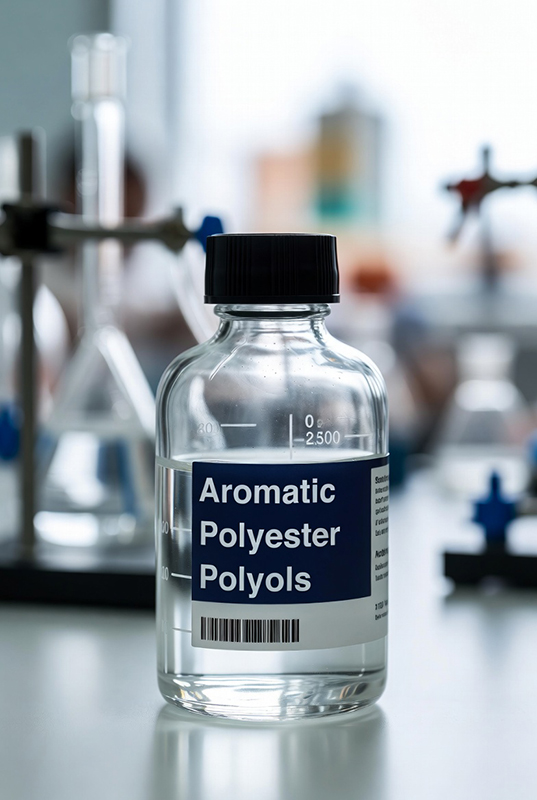
Alias: Aromatic hydrocarbon polyester polyols, Phthalic anhydride polyester polyols.
Aromatic polyester polyols are polyester polyols containing benzene rings. They generally refer to polyester polyols synthesized from aromatic dicarboxylic esters (or anhydrides, esters) and diols (or polyols). The raw materials for polyesters are generally phthalic anhydride (PA), terephthalic acid (PTA), isophthalic acid (IPA), etc. The commonly used diol raw material is diethylene glycol (DEG), but other diols can also be used. Adding a small amount of triol can give the polyester polyol molecule a branched structure.
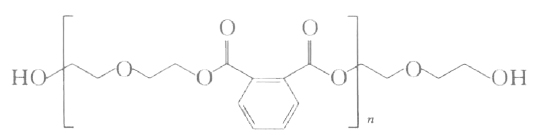
Poly(diethylene glycol phthalate) diol, CAS number: 32472-85-8, structural formula:
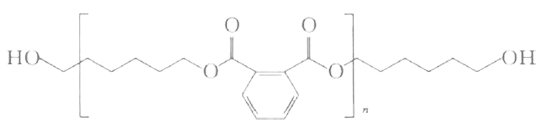
Poly(1,6-hexanediol phthalate) diol, CAS number: 54797-78-3, structural formula:
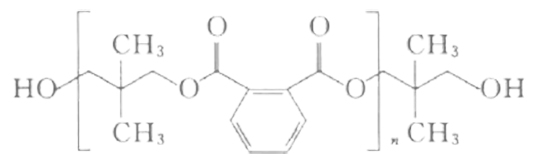
Poly(neopentyl glycol phthalate) diol, CAS number: 54909-13-6, structural formula:
Poly(neopentyl glycol hexanediol phthalate) diol, CAS number: 74499-74-4.
The aromatic polyester polyols used in the polyurethane industry are currently mainly phthalic anhydride polyester polyols. In addition, there are terephthalic acid polyester polyols obtained from polyester waste, PTA residues, and other raw materials through transesterification reactions with diethylene glycol, etc., as well as medium-to-high molecular weight aromatic copolyester diols obtained by polycondensation of dicarboxylic acids such as terephthalic acid, isophthalic acid, adipic acid, and sebacic acid with diols such as ethylene glycol, diethylene glycol, and neopentyl glycol.
Physicochemical Properties
Aromatic polyester polyols are light yellow to reddish-brown, viscous, transparent liquids. They are stable, have a slight aromatic odor, are non-toxic, non-corrosive, insoluble in water, and have good compatibility with most organic substances. They are non-flammable and non-explosive. Aromatic polyols are mostly polyester diols, with a functionality generally between 2 and 3. The viscosity of aromatic polyester diols is higher than that of aliphatic polyester diols of the same molecular weight.
Poly(neopentyl glycol adipate phthalate) diol has a CAS number of 74499-74-4.
Currently, the aromatic polyester polyols used in the polyurethane industry are mainly phthalic anhydride-based polyester polyols. In addition, there are terephthalic acid-based polyester polyols obtained from polyester waste, PTA residues, and other raw materials through transesterification reactions with diethylene glycol, etc., as well as medium-to-high molecular weight aromatic copolyester diols obtained by the polycondensation of dicarboxylic acids such as terephthalic acid, isophthalic acid, adipic acid, and sebacic acid with diols such as ethylene glycol, diethylene glycol, and neopentyl glycol.
Physical and Chemical Properties
Aromatic polyester polyols are light yellow to reddish-brown, viscous, transparent liquids. They are stable, have a slight aromatic odor, are non-toxic, non-corrosive, insoluble in water, and have good compatibility with most organic substances. They are non-flammable and non-explosive. Aromatic polyols are mostly polyester diols, with a functionality generally between 2 and 3. The viscosity of aromatic polyester diols is higher than that of aliphatic polyester diols of the same molecular weight.
PREVIOUS:Adipic Acid-Based Polyester Diols
CATEGORIES
LATEST NEWS
- Polyether Polyol vs Polyest...
- What Is Polyester Polyol?
- What Is Polyether Polyol?
- What Is Polyol?
- Why Is Reaction Balance Cri...
- Blowing Reaction vs Gelling...
- How Molecular Structure Det...
- Soft Segment vs Hard Segmen...
- What Is Crosslinking in Pol...
- What Is Polyurethane Polyme...
CONTACT US
Tel:+86 18688691634
Email:sam@1688pu.com
Add:No. 91 Central East Rd, Luxi Village, Gaobu Town, Dongguan 523283, China.