Preparation and Uses of Vegetable Oil Polyols
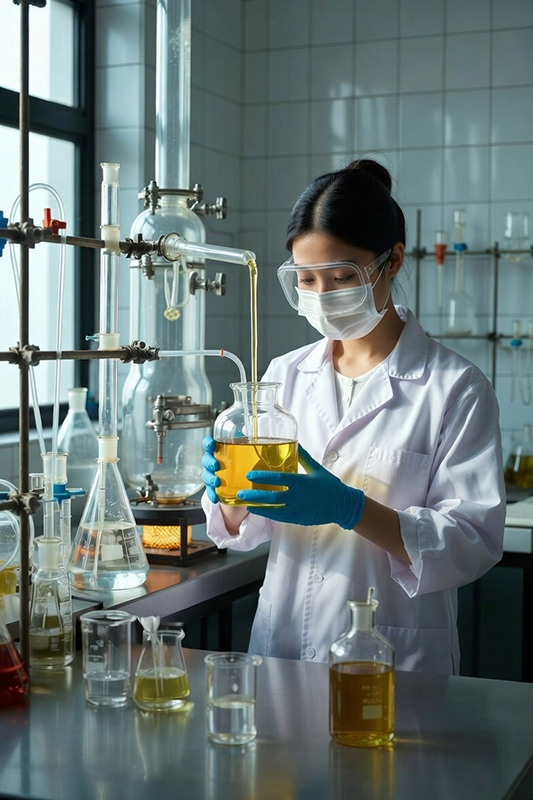
Most vegetable oil molecules, unlike castor oil, do not contain multiple hydroxyl groups, and their hydroxyl content needs to be increased through chemical methods. Vegetable oil is a natural resource. In recent years, a few companies at home and abroad have fully utilized relatively inexpensive vegetable oils such as soybean oil and palm oil as raw materials to develop a series of vegetable oil polyols, replacing polyether polyols from petrochemical resources. These are mainly used as raw materials for rigid polyurethane foams, and in smaller quantities for flexible polyurethane foams and polyurethane CASE materials.
Oils and fats naturally present in plants and animals are hydrophobic compounds insoluble in water, mainly fatty acid glycerides, i.e., triglycerides. The complex mixture of triglycerides in natural oils and fats can be converted into a raw material for polyurethanes through a series of chemical reactions under suitable conditions, such as hydrolysis, transesterification, saponification, hydrogenation, epoxidation, and amination reactions.
Transesterification of polyols such as glycerol and pentaerythritol with oils and fats can produce alcoholysis products with a certain hydroxyl functionality. However, the polyols prepared by this method often have complex compositions and varying properties due to the difficulty in controlling the reaction conditions.
Vegetable oils such as soybean oil and palm oil contain unsaturated double bonds in their molecular structure, which can be used to prepare polyols through transition metal-catalyzed carbonylation, ozonolysis, and epoxy ring-opening methods.
Transition metal-catalyzed carbonylation: The double bonds of vegetable oil undergo carbonylation under the catalytic oxidation of rhodium or cobalt complexes to form a branched aldehyde group, which is then reduced to a hydroxyl group under the catalysis of Raney Ni. The hydroxyl groups in the polyol product are mainly branched primary hydroxyl groups. This method uses expensive catalysts and has a complex process.
Ozonolysis directly cleaves the double bonds in the vegetable oil molecule, producing primary hydroxyl groups at the cleavage sites, resulting in polyols with lower molecular weight. The functionality of soybean oil polyol products is generally between 2.5 and 2.8. The epoxy ring-opening method is currently the most commonly used method for preparing vegetable oil polyols. It involves two consecutive reaction steps: the vegetable oil first reacts with peracetic acid (or hydrogen peroxide, etc.) to oxidize the double bonds and generate epoxidized vegetable oil (e.g., the most common epoxidized soybean oil), and then the epoxidized vegetable oil reacts with an alcohol and a catalyst to obtain the vegetable oil polyol. For example, epoxidized soybean oil is added to a mixture of alcohol and water, and the ring is opened under acid or base catalysis. The polyols obtained by this method have all hydroxyl groups as secondary hydroxyl groups. The hydroxyl functionality of soybean oil polyol can reach 4.1–4.5.
The disadvantages of preparing natural oil polyols through the reaction of unsaturated oil double bonds are that some oils contain a certain proportion of components without double bonds, which are difficult to separate from the epoxidized or hydroxylated vegetable oil and are inert components, affecting the performance of polyurethane products; in addition, the uneven distribution and activity of hydroxyl groups may lead to brittle and fragile rigid foams.
Generally, vegetable oil polyols with low hydroxyl values are only partially used to replace petroleum-based polyether polyols in the preparation of flexible polyurethane foams, while some vegetable oils with high hydroxyl functionality can be used as the main or even entire polyol raw material for rigid foams.
PREVIOUS:Castor Oil Derivative Polyols
NEXT:Soybean Oil Polyols
CATEGORIES
LATEST NEWS
- Polyether Polyol vs Polyest...
- What Is Polyester Polyol?
- What Is Polyether Polyol?
- What Is Polyol?
- Why Is Reaction Balance Cri...
- Blowing Reaction vs Gelling...
- How Molecular Structure Det...
- Soft Segment vs Hard Segmen...
- What Is Crosslinking in Pol...
- What Is Polyurethane Polyme...
CONTACT US
Tel:+86 18688691634
Email:sam@1688pu.com
Add:No. 91 Central East Rd, Luxi Village, Gaobu Town, Dongguan 523283, China.