Diethylene glycol
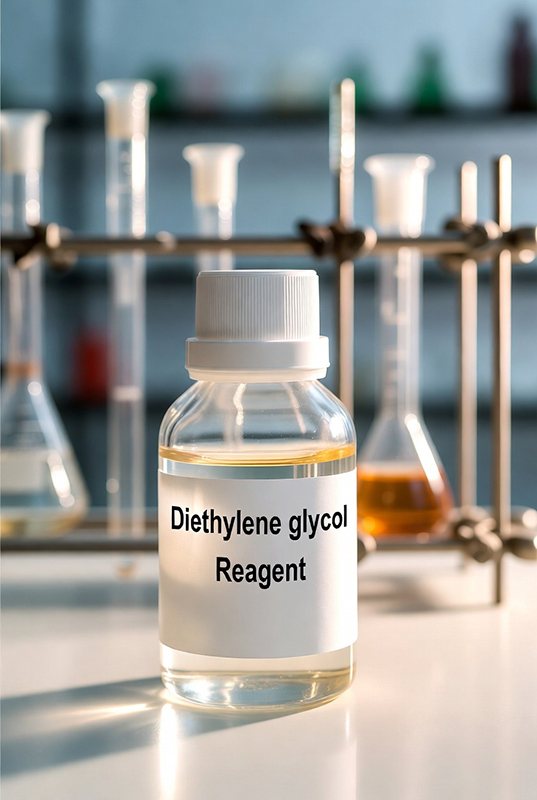
Other names: Diethylene glycol, diethylene glycol, di(hydroxyethyl) ether.
Abbreviation: DEG
Molecular formula: C4H10O3
Molecular weight: 106.12
CAS number: 111-46-6
Structural formula: HOCH2CH2OCH2CH2OH.
Physicochemical properties
Colorless or slightly yellow transparent viscous liquid, pungent and slightly sweet taste, flammable and low in toxicity, hygroscopic. Relative density (20℃): 1.115~1.118, boiling point: 245℃, boiling range (≥95%): 241~248℃, freezing point: -10.5℃, melting point: -6.5℃, surface tension (20℃): 44.8 mN/m.
Diethylene glycol and triethylene glycol are miscible with water, alcohols, ethers, acetone, and ethylene glycol, but insoluble in benzene and carbon tetrachloride.
Diethylene glycol is virtually non-toxic. The acute oral LD50 in rats is 14.8 g/kg, and the dermal LD50 in rabbits is 11.9 g/kg.
Preparation
Diethylene glycol can be obtained by reacting ethylene oxide with ethylene glycol. The process of preparing ethylene glycol from ethylene oxide and water can produce diethylene glycol and triethylene glycol as byproducts.
Properties and Uses
Mainly used in unsaturated polyester resins. Used as a gas dehydrating agent and aromatic hydrocarbon extraction solvent. Also used as a lubricant, softener, and finishing agent for textiles. It can also be used as a solvent, textile auxiliary agent, plasticizer for rubber and resins, humectant, sizing agent, and solvent for nitrocellulose, resins, and oils.
In the field of polyurethane, it can be used to synthesize aromatic polyester polyols and adipic acid-based aliphatic polyester polyols, and can be used as a chain extender for polyurethanes and an initiator for polyether polyols.
PREVIOUS:1,4-Butanediol
NEXT:Triethylene glycol
CATEGORIES
LATEST NEWS
- Triethylene glycol
- Diethylene glycol
- 1,4-Butanediol
- Ethylene Glycol
- ε-Caprolactone
- Tetrahydrofuran
- Ethylene Oxide
- Propylene Oxide
- Polyether Polyol Initiators
- Polyester Polyol Raw Materials
CONTACT US
Tel:+8618688691634
Email:sam@gstpu.com
Add:No. 91 Central East Rd, Luxi village, Gaobu town, Dongguan city, Guangdong Province, China