Dipropylene glycol
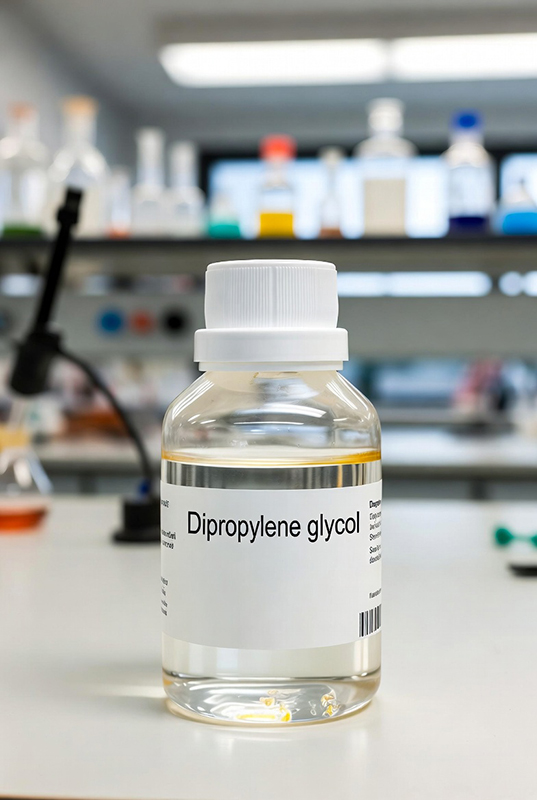
Other names: Dipropylene glycol, oxybispropanol, dihydroxypropyl ether.
Abbreviation: DPG
Molecular formula: C6H14O3
Molecular weight: 134.17
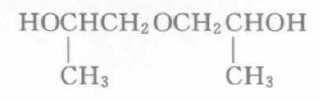
Dipropylene glycol has the CAS number 25265-71-8, and is actually a mixture of several isomers: 1,1′-oxobis(2-propanol) (CAS 108-61-2), 2-(2′-hydroxypropoxy)-1-propanol (CAS 106-62-7), and 2,2′-oxobis(1-propanol) (CAS 110-98-5).
Main component structural formula:
Physicochemical properties
Dipropylene glycol is a colorless, transparent, hygroscopic liquid, miscible with water in any proportion, soluble in many organic solvents, miscible with small-molecule aliphatic alcohols and ketones, and slightly soluble or sparingly soluble in hydrocarbon solvents. The n-octanol/water partition coefficient is approximately -1.07 per gram.
Properties and uses
End uses include unsaturated polyester resins, plasticizers, polyols for polyurethanes, alkyd resins, cosmetic ingredients and fragrance extractants, antifreeze, inks and coatings, hydraulic fluids, solvents for ether or ester derivatives, dye intermediates, pesticide intermediates, etc. The main markets are the plasticizer dipropylene glycol dibenzoate and unsaturated polyester resins. In the polyurethane field, it can be used to synthesize polyester polyols, as a chain extender, and as a catalyst for triethylenediamine, etc.
Toxicity
Dipropylene glycol is non-toxic. The acute oral toxicity LD50 in rats is 15 g/kg, and the dermal toxicity LD50 in rabbits is >2 g/kg.
PREVIOUS:1,3-Propanediol
NEXT:Tripropylene glycol
CATEGORIES
LATEST NEWS
- Hydroxypentanoic acid neope...
- 1,2-Pentanediol
- 1,5-Pentanediol
- Back to Work at Jiaxin New ...
- Trimethylpentanediol
- 1,2-Butanediol and 2,3-Buta...
- 1,3-Butanediol
- 3-Methyl-1,5-Pentanediol
- Diethylpentanediol
- Butylethylpropanediol
CONTACT US
Tel:+8618688691634
Email:sam@1688pu.com
Add:No. 91 Central East Rd, Luxi village, Gaobu town, Dongguan city, Guangdong Province, China