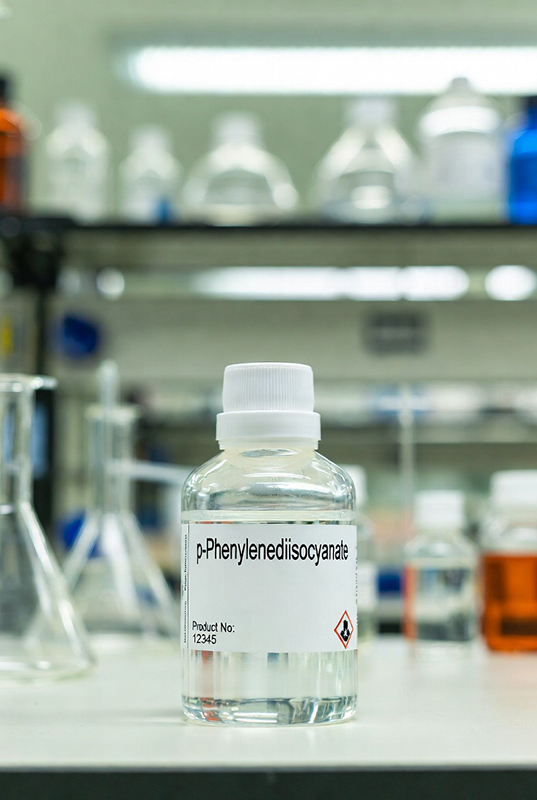
p-Phenylenediisocyanate
Abbreviations: PPDI, p-PDI.
Chemical Name: 1,4-Phenylenediisocyanate, Phenylene-1,4-diisocyanate, p-Phenylene diisocyanate.
Molecular Formula: C8H4N2O2
Molecular Weight: 160.13
CAS Number: 104-94-4
EINECS Number: 203-207-6 (Note: The CAS number for the isomer m-phenylenediisocyanate (m-PDI) is 123-61-5; currently, there are no commercially available products of m-phenylenediisocyanate).
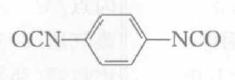
Structural Formula:
Physical and Chemical Properties
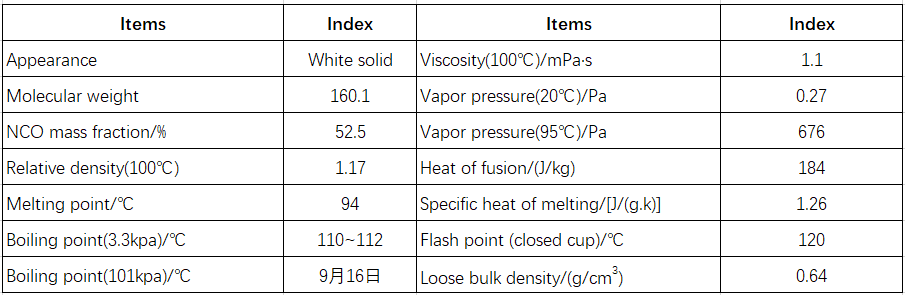
White flake solid, insoluble in water, partially soluble in organic solvents such as acetone and ethyl acetate. Sublimation occurs upon melting. Typical physical properties of PPDI are shown in Table 1-20. Table 1-20 Typical Physical Properties of p-Phenylenediisocyanate Products.
Additionally, m-phenylene diisocyanate (m-PDI) has a melting point of 49–51°C and a boiling point of 120°C/3.33 kPa.
A comparison of the vapor pressures of PPDI, TDI, and MDI is shown in Figure 1-6.
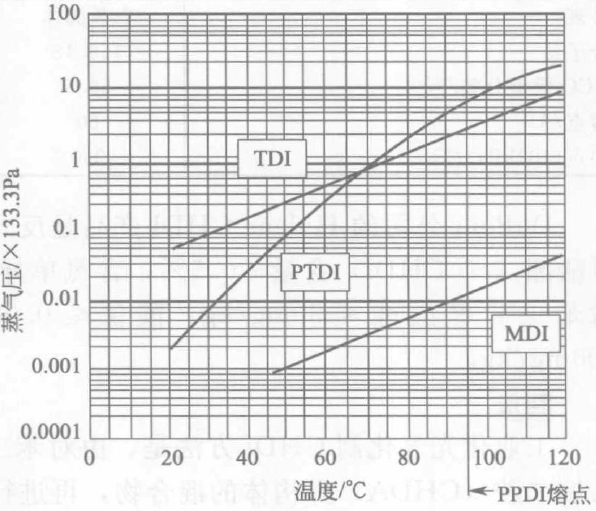
Figure 1-6. Comparison of vapor pressures of PPDI, TDI, and MDI.
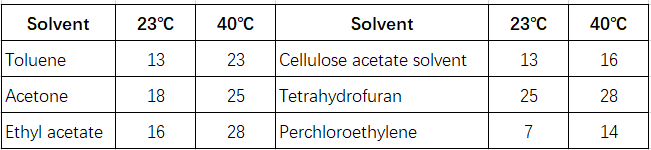
The solubility of PPDI in different solvents (g/100g solvent) is as follows:
Special Properties and Applications
PPDI is a special diisocyanate with a compact and symmetrical molecular structure. In polyurethanes, it forms tight hard segments and produces a high degree of phase separation, resulting in excellent wear resistance and high-temperature performance. PPDI is mainly used in the production of special cast and thermoplastic polyurethane elastomers. Application areas include: components used in humid and oily environments, applications requiring wear and tear resistance, and components subject to repetitive motion in power transmission, such as seals and gaskets, water pump belts, oilfield equipment materials, power couplings, conveyor belts, shock absorbers, rollers, and load-bearing wheels. Polyurethane elastomer application markets also include: power tools, mining, automotive, sporting goods, and office equipment.
PPDI-based polyurethane elastomers are generally synthesized using diol chain extenders. The resulting elastomers exhibit excellent dynamic mechanical properties, mechanical properties, resilience, wear resistance, flexural fatigue resistance, heat resistance, humidity resistance, solvent resistance, and low compression set at higher temperatures. They can be used continuously at 135°C. These properties are significantly better than those of MDI/BDO and TDI/MOCA systems, and the dynamic mechanical properties are superior to those of NDI-based polyurethane elastomers. However, PPDI has a high melting point and readily forms dimers and trimers in the molten state above 100°C. Therefore, when synthesizing prepolymers, solid PPDI should be added to liquid polyol at 70-80°C with vigorous stirring to dissolve and react.
Toxicity and Protection
For PPDI particles and vapors, the 8-hour and 12-hour time-weighted average (TWA) exposure limit is 0.03 mg/m³ (equivalent to 0.005 ppm).
PREVIOUS:Naphthalene Diisocyanate
CATEGORIES
LATEST NEWS
- Diethanolamine
- Triethanolamine
- Methyl Glucoside
- Mannitol
- Sorbitol
- Xylitol
- Pentaerythritol
- Trihydroxyethyl isocyanurate
- Trimethylolethane
- Glycerin
CONTACT US
Tel:+8618688691634
Email:sam@1688pu.com
Add:No. 91 Central East Rd, Luxi village, Gaobu town, Dongguan city, Guangdong Province, China