Polycaprolactone Diol and Polycaprolactone Triol
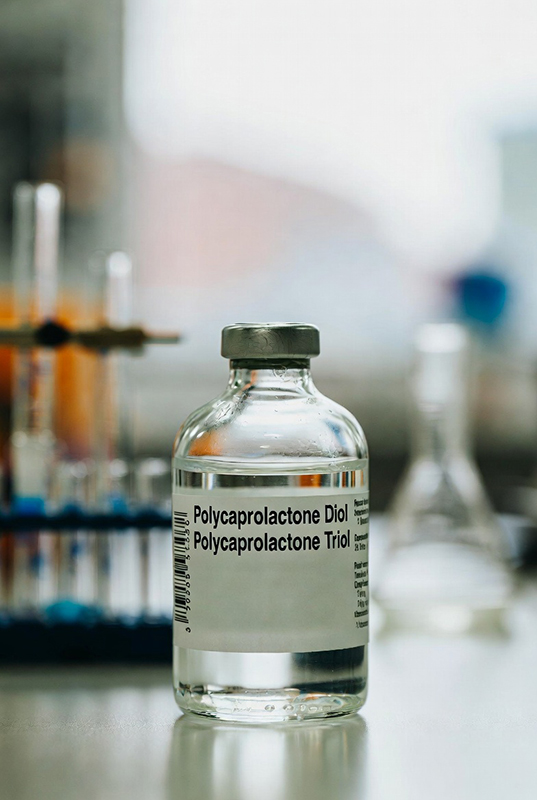
Abbreviation: PCL
Industrial polycaprolactone polyol products mainly consist of polycaprolactone diol, with a small amount of polycaprolactone triol. The molecular weight range of polycaprolactone diol and triol is typically between 300 and 4000.
The functionality of polycaprolactone polyol depends on the functionality of the polyol initiator used. Polycaprolactones produced from different initiators have different CAS numbers:
BDO polycaprolactone diol CAS number: 31831-53-5;
NPG polycaprolactone diol CAS number: 69089-45-8;
HDO polycaprolactone diol CAS number: 36609-29-7;
DEG polycaprolactone diol CAS number: 36890-68-3;
EG polycaprolactone diol CAS number: 27102-04-1;
DMPA polycaprolactone diol CAS number: 2522667-29-1;
TMP polycaprolactone triol CAS number: 37625-56-2.
The structural formula of polycaprolactone diol is as follows:

Physical and Chemical Properties
The relative density of polycaprolactone diol (55℃ liquid/20℃ water) is approximately 1.07, and the solubility parameter (δ) is 9.34–9.43 (cal/cm³)¹/², 1 cal = 4.18 J.
Polycaprolactone polyols generally have low color, high purity, precise functionality matching the initiator (very close to the theoretical functionality), and a narrow molecular weight distribution. They are usually colorless transparent liquids, and their viscosity (including melt viscosity) is lower than that of general polyester diols.
Characteristics and Uses
Polyurethane resins made from poly-ε-caprolactone diol have better temperature resistance and hydrolysis stability than adipic acid-based polyester polyols. The resulting polyurethane possesses high tensile strength, low-temperature flexibility, good elasticity, hydrolysis resistance, and weather resistance, as well as excellent tear and abrasion resistance, high-temperature adhesion, and resistance to hydrocarbon solvents and chemicals.
In principle, polycaprolactone diols and triols can be used to manufacture various polyurethane products. Due to the currently high price of PCL, it is generally used in special polyurethane elastomers, adhesives, coatings, etc. Application areas include: castable polyurethane elastomers, thermoplastic polyurethane elastomers, polyurethane synthetic leather resins, polyurethane coatings, polyurethane adhesives, sealants, microporous polyurethane elastomers, shoe soles, polyurethane films and sheets, reactive diluents, and various resin modification intermediates, optically transparent polyurethane lenses, and water-based polyurethanes.
Generally, polyurethanes made from low-acid-value polycaprolactone diols exhibit superior hydrolysis resistance. Polyurethanes made from PCL with a narrow molecular weight distribution have improved abrasion resistance and low compression set.
Polycaprolactone triols can also be used to produce polyurethane foams.
In addition to its use in polyurethanes, polycaprolactone polyols can also be used as modifiers for acrylic, polyester, and vinyl resin coatings; as reactive diluents to obtain high-solids coating systems; as toughening agents for epoxy resin coatings and potting compounds; and in one-component epoxy resin coatings.
PREVIOUS:Polymer Polyester Polyol
NEXT:Polycarbonate Diol
CATEGORIES
LATEST NEWS
- Diethanolamine
- Triethanolamine
- Methyl Glucoside
- Mannitol
- Sorbitol
- Xylitol
- Pentaerythritol
- Trihydroxyethyl isocyanurate
- Trimethylolethane
- Glycerin
CONTACT US
Tel:+8618688691634
Email:sam@1688pu.com
Add:No. 91 Central East Rd, Luxi village, Gaobu town, Dongguan city, Guangdong Province, China