Polyester Polyol Raw Materials
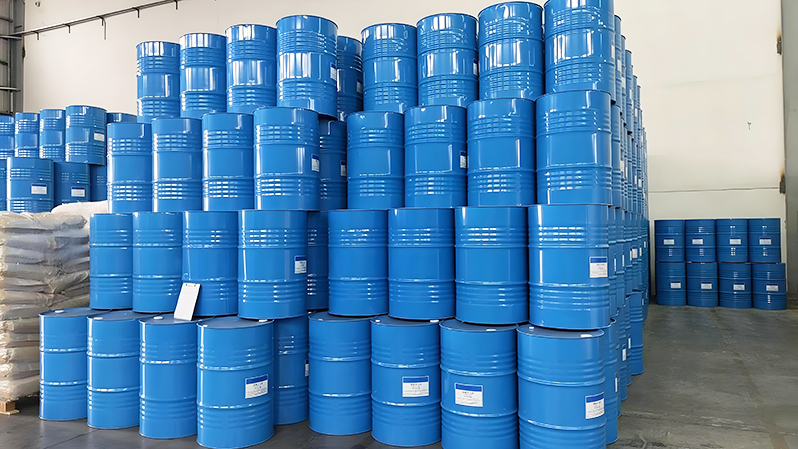
The main raw materials for polyester polyols are polyols and dicarboxylic acids. Polyols include diols and triols. Ethylene glycol (EG), diethylene glycol (DEG), 1,2-propanediol (PG), 1,4-butanediol (BDO), and neopentyl glycol (NPG) are the most commonly used diols in polyester polyol synthesis. 2-methylpropanediol (MPD) and 1,6-hexanediol (HDO) are also used in the synthesis of polyester diols. Trimethylolpropane (TMP) and glycerol can also be used in small amounts in the synthesis of polyester polyols to adjust the degree of branching, resulting in a polyester with a hydroxyl functionality greater than 2. Typical physical properties of commonly used diols are shown in table as below.
Typical physical properties of diol raw materials commonly used in polyester synthesis
| Diol (abbreviation) | Relative molecular mass | Melting point/°C | Boiling point/°C | Viscosity(25℃)mPa·s | Density/(g/ml) |
| EG | 62.1 | -13 | 196 | 17 | 1.11 |
| PG | 76.1 | -60 | 188 | 46 | 1.035 |
| DEG | 106.1 | -7 | 245 | 36(20℃) | 1.12 |
| NPG | 104.1 | 125 | 208 | 一 | 一 |
| DBO | 90.1 | 20 | 229 | 70 | 1.017 |
| MPD | 90.1 | -54 | 212 | 168 | 1.02 |
| HDO | 118 | 43 | 250 | 一 | 一 |
In principle, all aliphatic diols containing primary or secondary hydroxyl groups can be used in polyester synthesis. In addition to the commonly used diols mentioned above, there are also 1,3-butanediol, 1,3-propanediol, 1,5-pentanediol, 3-methyl-1,5-pentanediol, 2,4-diethyl-1,5-pentanediol, 2,2,4-trimethyl-1,3-pentanediol, dipropylene glycol, 1,4-dihydroxymethylcyclohexane, 1,4-cyclohexanediol, hydroxypivalic acid hydroxypivalyl ester, 2-butyl-2-ethyl-1,3-propanediol, 2-ethyl-1,3-hexanediol, dodecanediol, dodecylcyclohexanediol, tricyclic 12-carbon primary hydroxyl diol, etc. The physicochemical properties of most commercial diols will be described in detail in the “Diols” section. Among these diols, diols with an even number of carbon atoms (such as 1,4-butanediol and 1,6-hexanediol) produce polyester diols with higher crystallinity when reacted with adipic acid, and are often used in the production of polyurethane adhesives requiring high initial tack strength and high-strength elastomers. Polyester diols prepared from diols with side groups, such as neopentyl glycol, 3-methyl-1,5-pentanediol, 2,4-diethyl-1,5-pentanediol, and 2,2,4-trimethyl-1,3-pentanediol, exhibit good flexibility and hydrolysis resistance. Perstorp AB’s polyol NS20 is a diol synthesized from neopentyl glycol and propylene oxide in a 1:2 molar ratio, with a relative molecular weight of 220, a hydroxyl value of 480–530 mgKOH/g, and a typical viscosity of 170 mPa·s. It is used as a raw material for the synthesis of polyester polyols. Due to the high cost of many diols, they are not widely used in polyester diol production. However, with the increased industrialization of certain diols, lower raw material prices, and increased demand for special functionalized polyester diols, some diols will be used in large quantities for the synthesis of polyester polyols. For example, Kuraray Co., Ltd. in Japan uses its own 3-methyl-1,5-pentanediol as a raw material to produce a series of polyester diols and polyester triols. The most commonly used dicarboxylic acid in polyester synthesis is adipic acid. Sebacic acid is also used in small quantities to synthesize special polyester diols requiring hydrolysis resistance, but its use is limited due to its higher price compared to adipic acid. Terephthalic acid, phthalic anhydride, and isophthalic acid are also commonly used raw materials for the synthesis of aromatic polyester polyols. Small amounts of trimellitic anhydride can also be used in special polyester polyols to create a certain degree of branching. Other dicarboxylic acids (anhydrides, esters) that can be used in polyester synthesis include succinic acid, glutaric acid, azelaic acid, dodecanedioic acid, 1,4-cyclohexanedicarboxylic acid, dimer acid, and mixed dicarboxylic acids. Table 5-11 shows the melting points, relative molecular weights, and other parameters of some dicarboxylic acids (anhydrides/esters). Typical physical properties of dicarboxylic acids and polycarboxylic acids (anhydrides) are detailed in the “Dicarboxylic Acids” section.
| Name | CAS NO. | Relative molecular mass | Melting point/℃ |
| Malonic acid (Propanedioic acid) | 141-82-2 | 104.06 | 136 |
| Succinic acid (Butanedioic acid) | 110-15-6 | 118.09 | 190 |
| Glutaric acid (Pentanedioic acid) | 110-94-1 | 132.12 | 99 |
| Adipic acid (Hexanedioic acid) | 124-04-9 | 146.14 | 152 |
| Pimelic acid (Heptanedioic acid) | 111-16-0 | 160.17 | 106 |
| Suberic acid (Octanedioic acid) | 505-48-6 | 174.20 | 143 |
| Azelaic acid (Nonanedioic acid) | 123-99-9 | 188.22 | 106 |
| Sebacic acid (Decanedioic acid) | 111-20-6 | 202.25 | 134 |
| Dodecandioic acid | 693-23-2 | 230.3 | 128 |
| Terephthalic acid | 100-21-0 | 166.13 | 300(sublimation) |
| Isophthalic acid | 121-91-5 | 166.13 | 347(sublimation) |
| O-phtalic acid | 88-9-3 | 166.13 | 230 |
| Phtgalic acid | 85-44-9 | 148.12 | 130.5 |
| Dimethyl terephtalate | 120-61-6 | 194.18 | 141 |
| 1,4-cyclohexanedicarb oxylic acid | 1076-97-7 | 172.2 | 167 |
NEXT:Toluene Diisocyanate
CATEGORIES
LATEST NEWS
- Diethanolamine
- Triethanolamine
- Methyl Glucoside
- Mannitol
- Sorbitol
- Xylitol
- Pentaerythritol
- Trihydroxyethyl isocyanurate
- Trimethylolethane
- Glycerin
CONTACT US
Tel:+8618688691634
Email:sam@1688pu.com
Add:No. 91 Central East Rd, Luxi village, Gaobu town, Dongguan city, Guangdong Province, China