Polyether Diol
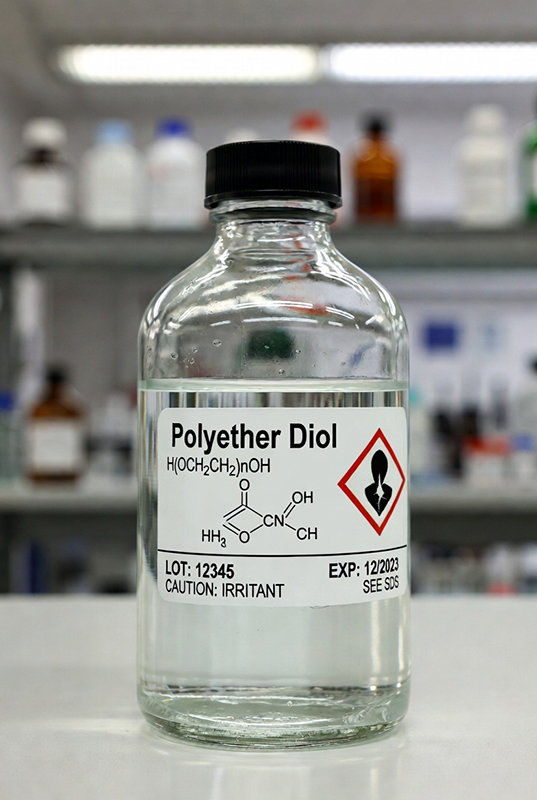
Polyoxypropylene glycol, abbreviated as PPG, is also known as poly(propylene oxide) glycol or polypropylene glycol.
The English names for polyoxypropylene glycol include: polyoxypropylene glycol; polypropylene glycol, etc.
Structural formula of polyoxypropylene glycol:

The common CAS number for PPG is 25322-69-4.
The most common polyether diols are polyoxypropylene glycols with molecular weights of 1000 and 2000, commonly known in China as 210 polyether and 220 polyether, respectively. Some manufacturers also call them 1020 and 2020 polyether. Polyether diols with molecular weights of 400, 600, 700, 3000, and 4000 are generally referred to as 204 polyether, 206 polyether, 207 polyether, 230 polyether, and 240 polyether, respectively. Some manufacturers also name polyether diols using letters such as D and G, along with the molecular weight, such as DL-2000, TDB-6000, and PPG-2000. In addition to polyoxypropylene glycol, some manufacturers also supply copolymer polyether diols modified with ethylene oxide.
Physical and Chemical Properties
Generally, polyether diols are clear, colorless or light yellow transparent oily liquids, soluble in most organic solvents such as toluene, ethanol, and acetone. PPG-200, 400, and 600 are soluble in water, while higher molecular weight PPGs are insoluble in water. They can react with diisocyanates to form linear polyurethanes.
National Standard GB/T 12008.2—2010 lists the quality indicators for 210 polyether and 220 polyether, divided into premium grade and qualified grade. For qualified grade, the moisture content is ≤0.08%, the sodium and potassium ion content are both ≤8 mg/kg, and the color (Pt-Co) is ≤100.
Characteristics and Uses
Polyether diols are mainly used in the preparation of polyurethane elastomers, plastic running tracks and paving materials, waterproof coatings, adhesives, and polyurethane foams. Linear chain polyurethanes are formed by the reaction of dihydroxy polyethers with diisocyanates, thus increasing the softness and tensile elongation of the polyurethane. The higher the molecular weight of the polyether, the greater the softness and elongation of the product. Medium molecular weight polyether diols (such as 2000) can be used as auxiliary polyethers, in combination with polyether triols, for the production of flexible polyurethane foams.
Polyether diols and some polyether polyols are also used as intermediates in esterification, etherification, and polycondensation reactions, and as release agents, solubilizers, plasticizers, defoamers, lubricants, and additives in synthetic oils, including additives for water-soluble cutting fluids, roller oils, and hydraulic oils. PPG-400 can be used in cosmetics as an emollient, softening agent, and lubricant.
PREVIOUS:Applications and Classification of Polyether Polyols
NEXT:Polyether Triols
CATEGORIES
LATEST NEWS
- Diethanolamine
- Triethanolamine
- Methyl Glucoside
- Mannitol
- Sorbitol
- Xylitol
- Pentaerythritol
- Trihydroxyethyl isocyanurate
- Trimethylolethane
- Glycerin
CONTACT US
Tel:+8618688691634
Email:sam@1688pu.com
Add:No. 91 Central East Rd, Luxi village, Gaobu town, Dongguan city, Guangdong Province, China