Polymer Polyester Polyol
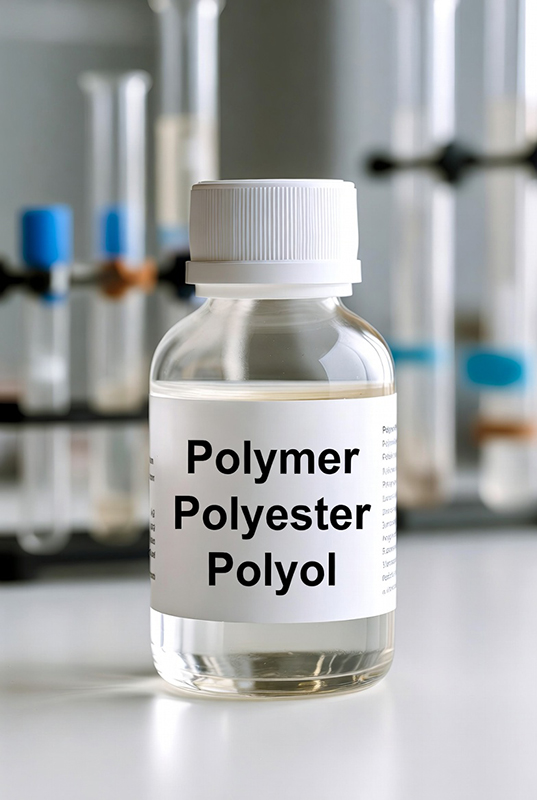
Also known as: Polyester Polymer Polyol, Polymer Graft-Modified Polyester Polyol.
Conventional “polymer polyols” are polyether polyols modified with vinyl polymers obtained by free-radical polymerization of vinyl monomers in the continuous phase of polyether polyols (see Section 2.2), and can also be called polymer polyether polyols. Another type of polymer polyol—a product obtained by free-radical polymerization of vinyl monomers using polyester polyols as a base—is less common. This type of polymer-modified polyol is generally called polymer polyester polyol or polyester polymer polyol. Its properties are similar to those of polyether polymer polyols, and it appears as a white viscous liquid.
Polymer polyester polyol is a polymer dispersion composed of a base polyester polyol, a macromolecular dispersant, and vinyl polymer particles. Its preparation method is similar to that of polyether-based polymer polyols. Generally, styrene or a mixture of styrene and a small amount of acrylonitrile is used as the vinyl monomer, and free-radical polymerization is carried out in a polyester polyol base medium in the presence of an initiator, a macromolecular dispersant, and a chain transfer agent.
The content of vinyl polymer in polymer polyester polyol (also called “solid content”) is generally between 10% and 30%, and the molecular weight of the linear or slightly branched base polyester is generally between 1000 and 2500. Because the viscosity of polyester polyols is higher than that of polyether polyols, the preparation process is more difficult than that of polyether-based polymer polyols.
Polymer polyester polyols are mainly used in the production of microporous polyurethane shoe soles and insoles, and are also used in polyurethane flexible foams. Replacing part of the polyester polyol with polymer polyester polyol can significantly improve the load-bearing capacity and strength of the microporous foam network. Its advantages include: excellent hydrolysis resistance; higher hardness at the same foam density, allowing for lower density while maintaining the same hardness, or reducing the amount of isocyanate prepolymer, etc., to produce low-density microporous elastomer shoe materials, thus saving raw materials and costs; a more uniform cell structure, increasing the open-cell ratio of foamed plastic products and improving dimensional stability, reducing the amount of foaming agent needed, and even allowing for uniform and fine cell structures without a foaming agent in microporous insole formulations; improved mechanical properties such as tear strength of foamed plastic products; and when used in polyester-based polyurethane soft foams, it can reduce the amount of TDI-65.
PREVIOUS:Dimer Polyester Diols
CATEGORIES
LATEST NEWS
- Diethanolamine
- Triethanolamine
- Methyl Glucoside
- Mannitol
- Sorbitol
- Xylitol
- Pentaerythritol
- Trihydroxyethyl isocyanurate
- Trimethylolethane
- Glycerin
CONTACT US
Tel:+8618688691634
Email:sam@1688pu.com
Add:No. 91 Central East Rd, Luxi village, Gaobu town, Dongguan city, Guangdong Province, China