What Is Polyether Polyol?
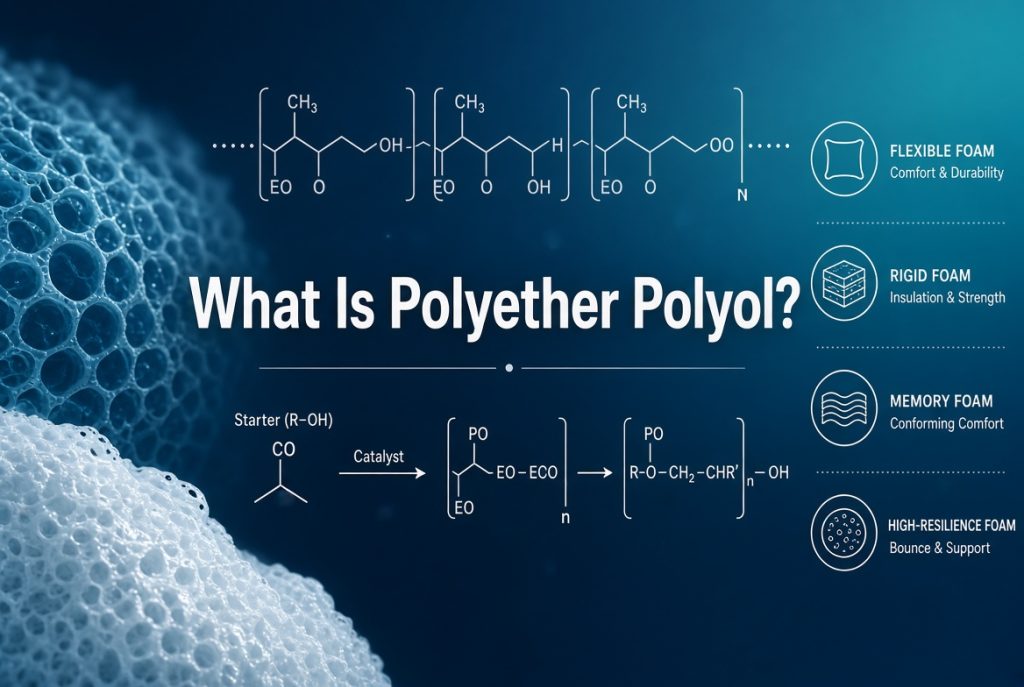
Polyether polyol is one of the most important raw materials used in polyurethane (PU) production. From flexible foam and high-resilience foam to rigid foam, CASE applications, and many other PU products, polyether polyols play a key role in determining the final material performance.
But what exactly is polyether polyol—and why does choosing the right one matter so much?
1. What Is Polyether Polyol?
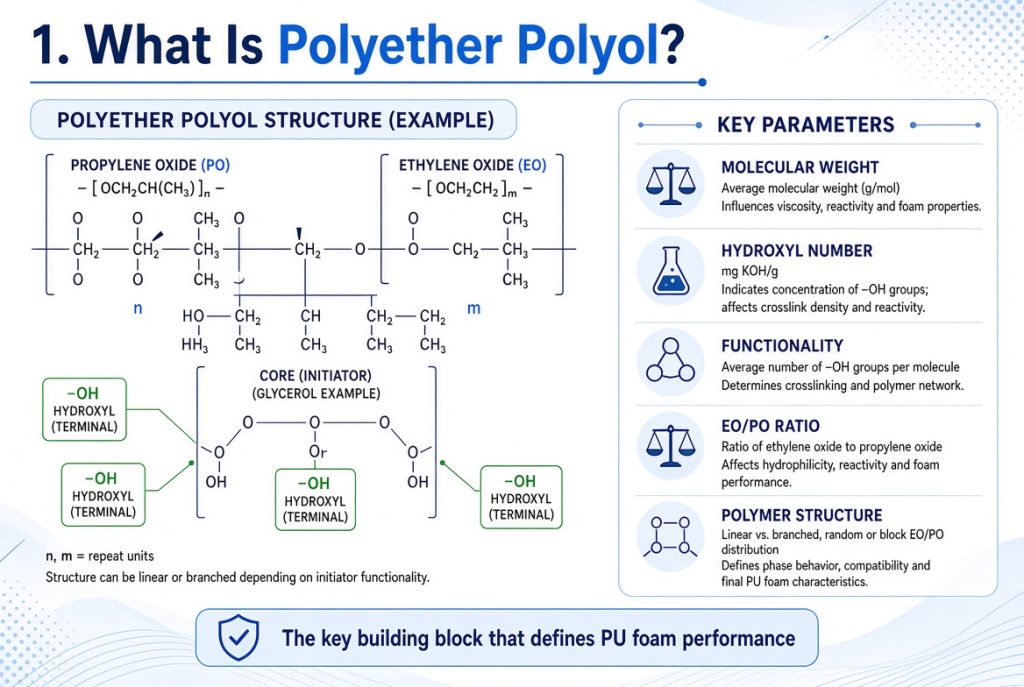
Polyether polyol is a polymer containing multiple hydroxyl (-OH) groups, typically produced by the polymerization of alkylene oxides such as propylene oxide (PO) and ethylene oxide (EO) using a suitable initiator and catalyst.
Its molecular structure can be adjusted by changing factors such as:
- Molecular weight
- Hydroxyl number
- Functionality
- EO/PO ratio
- Polymer structure
These parameters directly influence the properties of the final polyurethane foam, including density, hardness, resilience, cell structure, flexibility, and dimensional stability.
In simple terms:
Polyether polyol is not just a raw material—it is one of the key building blocks that helps define PU foam performance.
2. Why Is Polyether Polyol Needed?
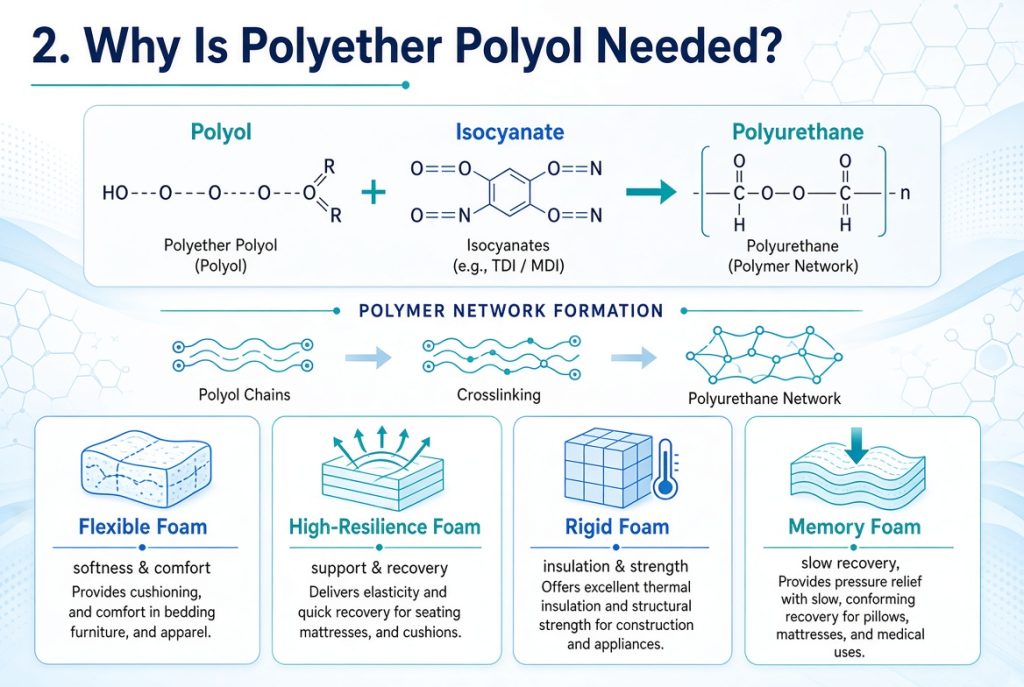
Polyurethane is formed through a chemical reaction between polyols and isocyanates.
During the reaction, the hydroxyl groups in polyether polyol react with isocyanates to form polyurethane polymer chains.
By selecting different polyether polyols and adjusting their formulation, manufacturers can achieve different performance requirements.
For example:
Flexible Foam:
Good softness, elasticity, comfort, and recovery.
High-Resilience Foam:
Higher resilience, support, durability, and faster recovery.
Rigid Foam:
Higher dimensional stability, strength, and thermal insulation performance.
Memory Foam:
Slow recovery and controlled viscoelastic properties.
This is why there is no single “best” polyether polyol for every PU application.
The right choice depends on the final product and processing conditions.
3. How Does Polyether Polyol Work in PU Foaming?
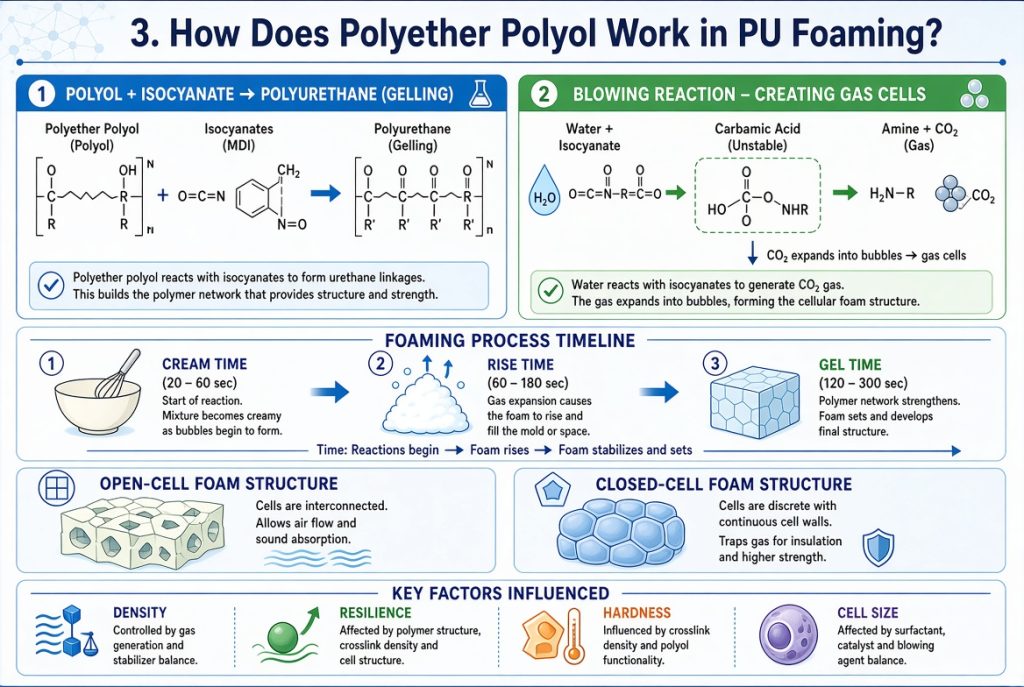
PU foaming is not simply about mixing two materials together.
A typical foam system involves several reactions and components working together, including:
Polyol + Isocyanate → Polyurethane
At the same time, the blowing reaction generates gas that creates foam cells, while the gelling reaction builds the polymer structure.
The balance between these reactions affects:
- Cream time
- Rise time
- Gel time
- Cell size
- Foam density
- Resilience
- Hardness
- Open-cell or closed-cell structure
- Dimensional stability
Polyether polyol provides the hydroxyl groups required for polymer formation, while its molecular structure influences how the polymer network develops.
This means that changing the polyol can change the entire foaming behavior.
The challenge is not simply selecting a polyol. The challenge is achieving the right reaction balance.
4. Common Problems With Polyether Polyol
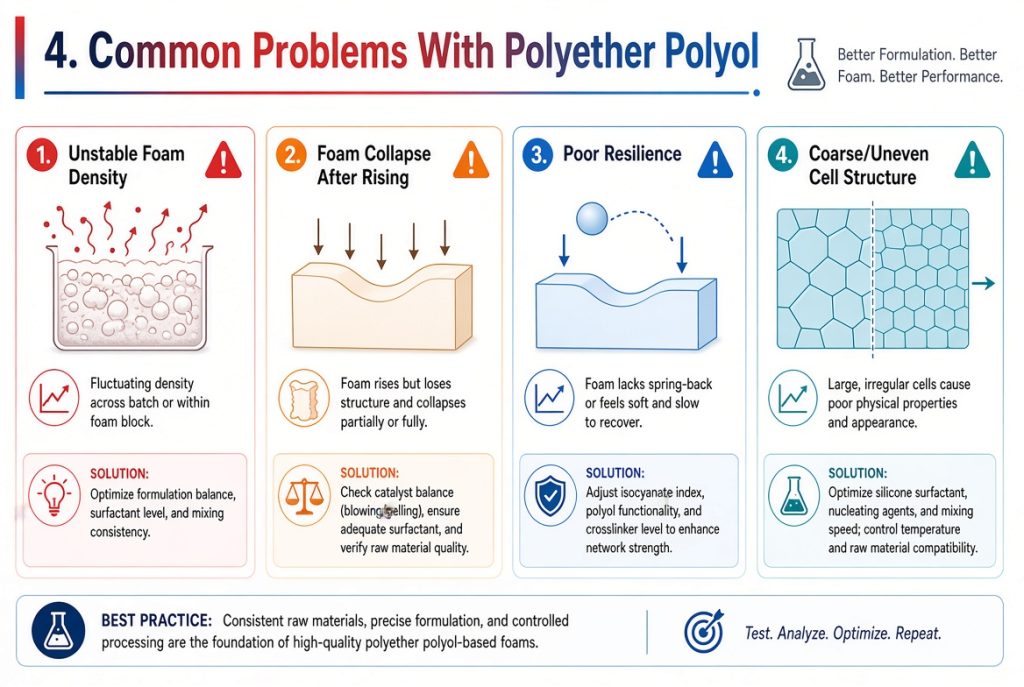
Even when the raw materials appear to be correct, foam production can still experience problems.
Problem 1: Foam Density Is Unstable
Possible causes include changes in blowing efficiency, formulation balance, raw-material temperature, or processing conditions.
Solution:
Optimize the polyol combination, blowing system, catalyst balance, and processing parameters together rather than adjusting only one component.
Problem 2: Foam Collapses After Rising
This can occur when the blowing reaction is too fast compared with polymer formation, resulting in insufficient cell-wall strength.
Solution:
Adjust the gelling/blowing catalyst balance and optimize the polyol and formulation structure.
Problem 3: Poor Resilience
For high-resilience foam, simply increasing the amount of polyol does not guarantee better rebound performance.
Solution:
Select suitable base polyols and polymer polyols, then optimize the overall formulation, catalyst system, water level, and isocyanate index.
Problem 4: Cell Structure Is Too Coarse or Uneven
Cell structure can be affected by polyol properties, surfactant, catalyst, blowing conditions, mixing efficiency, and mold or ambient temperature.
Solution:
Analyze the complete formulation and processing conditions instead of treating the polyol as an isolated factor.
5. How Can GST Help?
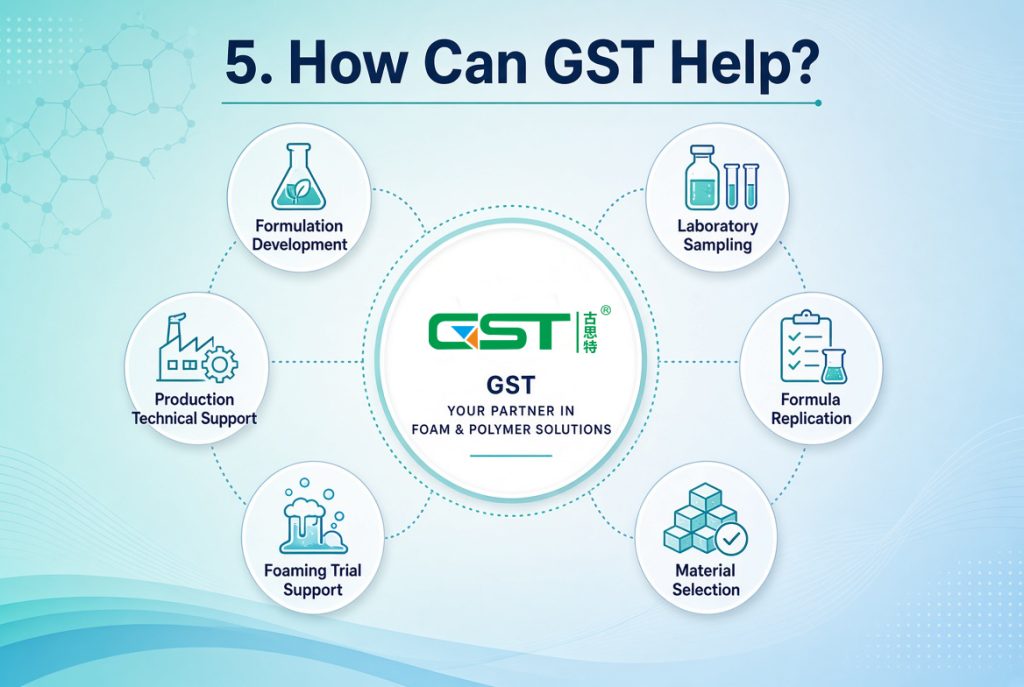
At GST, we understand that customers are usually not looking for a single raw material.
They are looking for a stable PU solution that works in real production.
GST provides customized polyurethane combination materials and formulation development for different applications, including:
- Flexible foam
- High-resilience foam
- Memory foam
- Rigid foam
- Self-skinning foam
- PU GEL
- Bio-based PU systems
- Other customized PU applications
Our technical team can evaluate the customer’s target product, raw materials, equipment, density, hardness, resilience, processing conditions, and other requirements to develop a suitable formulation.
GST’s Technical Support Includes:
Formulation Development
Develop and optimize PU formulations according to specific product requirements.
Laboratory Sampling
Conduct laboratory trials before production to evaluate reaction behavior and foam performance.
Formula Replication
Analyze customer samples and develop formulations designed to achieve similar target properties.
Material Selection
Recommend suitable polyether polyols, polymer polyols, catalysts, surfactants, and other components.
Foaming Trial Support
Help customers optimize mixing, temperature, reaction balance, density, cell structure, and final physical properties.
Production Technical Support
Provide technical guidance during trial production and help identify problems when foam performance is unstable.
6. From Polyol Selection to Complete PU Solutions
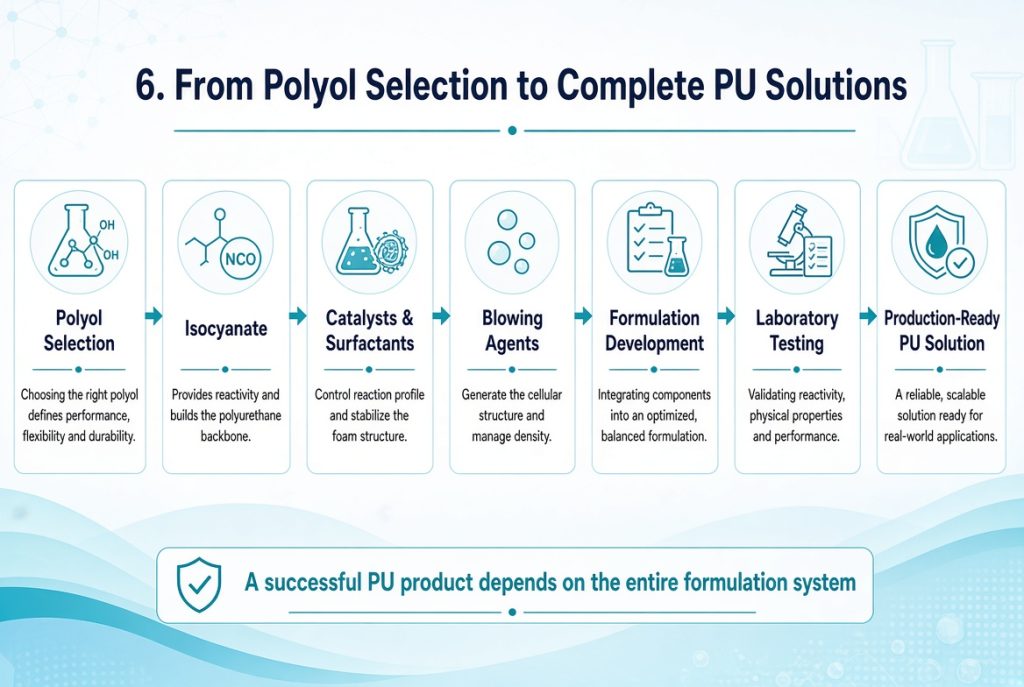
Polyether polyol is an important part of polyurethane chemistry—but a successful PU product depends on the entire formulation system.
Polyol selection, isocyanate, catalysts, surfactants, blowing agents, water, additives, processing equipment, temperature, and production conditions must work together.
That is where formulation development becomes critical.
GST combines raw-material selection, formulation R&D, laboratory testing, and application experience to help customers move from an idea to a production-ready PU solution.
If you are experiencing problems with foam density, hardness, resilience, cell structure, reaction time, dimensional stability, or production consistency, GST can help evaluate your formulation and develop a suitable polyurethane system.
Need a customized PU system or formulation?
Contact GST for samples, formulation development, and technical support.
PREVIOUS:What Is Polyol?
CATEGORIES
LATEST NEWS
- Polyether Polyol vs Polyest...
- What Is Polyester Polyol?
- What Is Polyether Polyol?
- What Is Polyol?
- Why Is Reaction Balance Cri...
- Blowing Reaction vs Gelling...
- How Molecular Structure Det...
- Soft Segment vs Hard Segmen...
- What Is Crosslinking in Pol...
- What Is Polyurethane Polyme...
CONTACT US
Tel:+86 18688691634
Email:sam@1688pu.com
Add:No. 91 Central East Rd, Luxi Village, Gaobu Town, Dongguan 523283, China.