Polymer Polyol
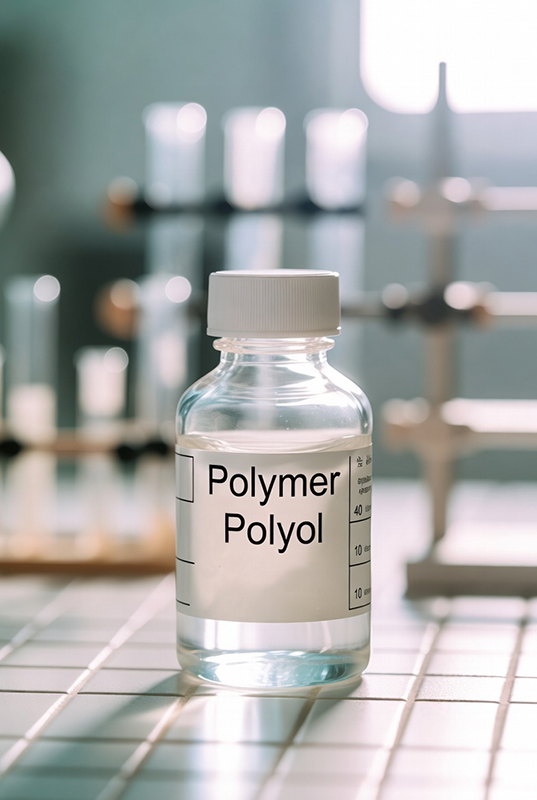
Alias:Grafted polyether, copolymer polyol, commonly known as “white polyether”.
Abbreviation: POP
The CAS numbers for styrene-acrylonitrile grafted polymer polyols based on PO-EO copolymer triol are 68541-83-3 and 57913-80-1.
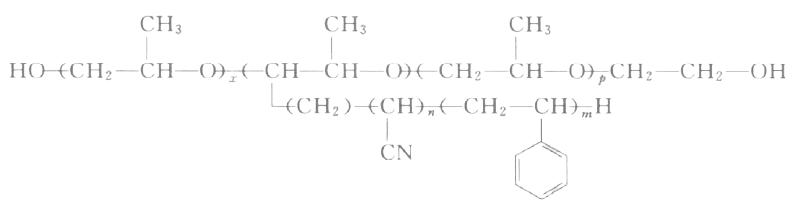
The schematic chemical structure of vinyl polymer grafted polyether is as follows:
Physical and Chemical Properties
Polymer polyol is generally a milky white to light yellowish viscous liquid with a relative density of 1.02 to 1.05. It is stable, has a slight characteristic odor, is sparingly soluble in water, and has good compatibility with most organic substances. It is a non-flammable and non-explosive material.
Typical physical properties of polymer polyols can be found in the product specifications of relevant manufacturers in this section.
Polymer polyol is a low-toxicity chemical. Some products contain residual monomers such as styrene; the vapor is irritating to the eyes, and inhalation of the vapor can cause headaches, loss of appetite, and vomiting. If skin contact occurs, wash with soap and water; if splashed into the eyes, rinse with low-pressure clean water or seek medical attention. It has a high flash point, is combustible, with a flash point ≥200°C, and is not explosive. Keep away from fire and heat sources. Protective equipment is recommended during handling.
Characteristics and Uses
Polymer polyols (grafted polyether polyols) contain rigid styrene, acrylonitrile homopolymers and copolymers, and grafted polymers. These vinyl polymers act like organic “fillers,” significantly improving the hardness of flexible foam plastics and increasing load-bearing capacity. For example, when used in cushion foam plastics, it can reduce the thickness of the product, lower the foam density, and thus reduce costs.
Polymer polyols are mainly used in the manufacture of high-load-bearing polyurethane foams. When used in cold-cured high-resilience foams, it can increase the compressive strength of the foam product, i.e., the hardness and load-bearing capacity of high-performance polyurethane foam plastics, and can also increase the open-cell structure of the foam. It can be used in the production of high-hardness flexible block foams, high-resilience foams, hot-molded flexible foams, semi-rigid foams, self-skinning foams, and reaction injection molding (RIM) products.
PREVIOUS:High Functionality Polyether Polyols
NEXT:Polyurea Polyol
CATEGORIES
LATEST NEWS
- Polyether Polyol vs Polyest...
- What Is Polyester Polyol?
- What Is Polyether Polyol?
- What Is Polyol?
- Why Is Reaction Balance Cri...
- Blowing Reaction vs Gelling...
- How Molecular Structure Det...
- Soft Segment vs Hard Segmen...
- What Is Crosslinking in Pol...
- What Is Polyurethane Polyme...
CONTACT US
Tel:+86 18688691634
Email:sam@1688pu.com
Add:No. 91 Central East Rd, Luxi Village, Gaobu Town, Dongguan 523283, China.