Trimethylpentanediol
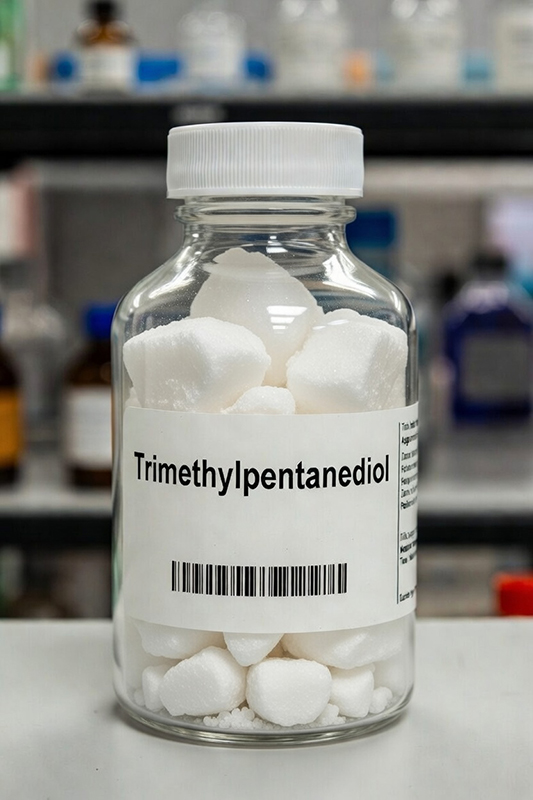
Chemical Name: 2,2,4-Trimethyl-1,3-pentanediol
Abbreviation: TMPD
Molecular Formula: C8H18O2
Molecular Weight: 146.22
CAS Number: 144-19-4
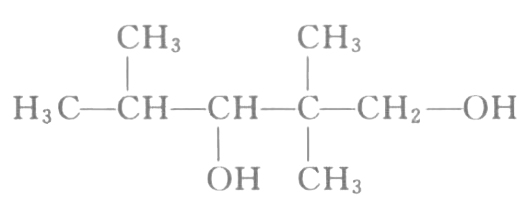
Structural Formula:
Physicochemical Properties
In its normal state, it is a white, waxy solid; after melting, it becomes a transparent liquid. Slightly soluble in water. Available in both solid and molten forms.
TMPD has very low toxicity. The acute LD50 in rats is 3730 mg/kg, and the dermal absorption LD50 in guinea pigs is >1000 mg/kg.
Properties and Uses
TMPD diol is mainly used in the manufacture of high-solids content coatings and corrosion-resistant unsaturated polyester resins. It can also be used in polyester-based polyurethane coatings, etc. Application areas include automotive paints, household appliances, high-solids content and water-based coatings, fiber softeners, general coatings, cosmetic polymer intermediaries, FRP plastics, etc.
TMPD contains one secondary hydroxyl group and one primary hydroxyl group. The large side groups in its molecular structure contribute to the excellent hydrolysis resistance, chemical resistance, and anti-fouling properties of the coating. Simultaneously, the large side groups and asymmetric structure give the resin good solubility, low solution viscosity, low resin density, and low Tg. The branched structure and β-hydrogen atoms contribute to the resin’s moderate thermal stability and weather resistance.
The secondary hydroxyl group of 2,2,4-trimethyl-1,3-pentanediol has only moderate reactivity. Therefore, care must be taken to ensure its complete reaction during synthesis. A small amount of tin catalyst (such as hydrated monobutyltin oxide) can be used to catalyze the esterification reaction. The reaction temperature should not exceed 215℃ to prevent decomposition.
PREVIOUS:1,2-Butanediol and 2,3-Butanediol
NEXT:1,5-Pentanediol
CATEGORIES
LATEST NEWS
- Polyether Polyol vs Polyest...
- What Is Polyester Polyol?
- What Is Polyether Polyol?
- What Is Polyol?
- Why Is Reaction Balance Cri...
- Blowing Reaction vs Gelling...
- How Molecular Structure Det...
- Soft Segment vs Hard Segmen...
- What Is Crosslinking in Pol...
- What Is Polyurethane Polyme...
CONTACT US
Tel:+86 18688691634
Email:sam@1688pu.com
Add:No. 91 Central East Rd, Luxi Village, Gaobu Town, Dongguan 523283, China.