Polyether Polyol vs Polyester Polyol
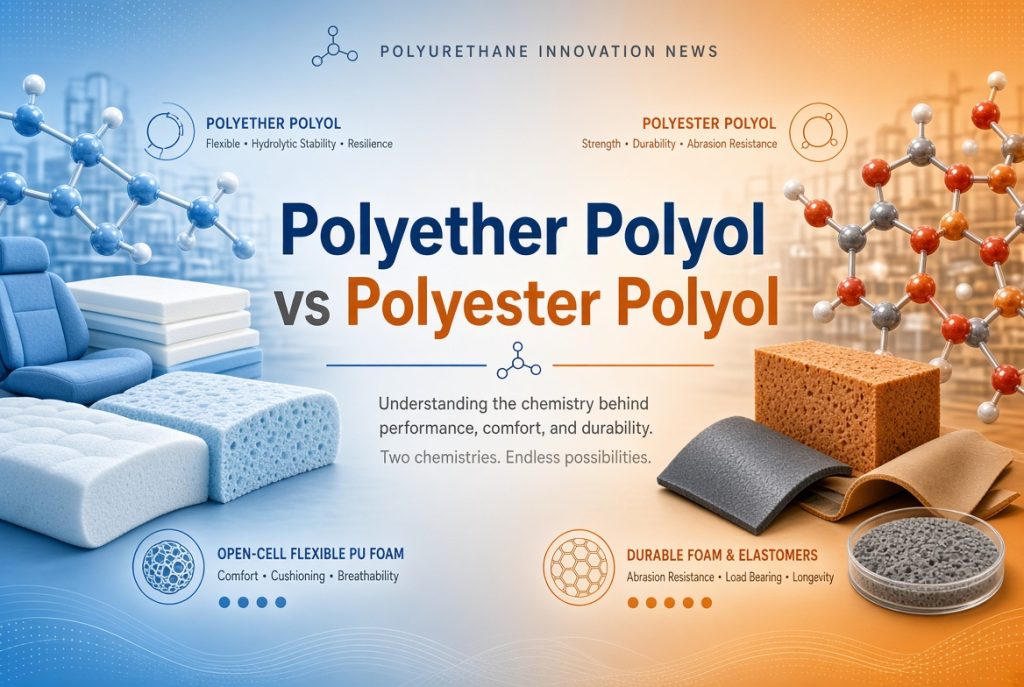
Polyurethane (PU) foam is used in everything from automotive seats and furniture to insulation, footwear and industrial products. But behind the final foam product is a critical decision that is often overlooked:
Should you use polyether polyol or polyester polyol?
The answer depends on the required foam structure, mechanical performance, chemical resistance, processing conditions and final application.
Understanding the difference can help manufacturers choose the right PU system and avoid common foaming problems.
1. What Are Polyether Polyol and Polyester Polyol?
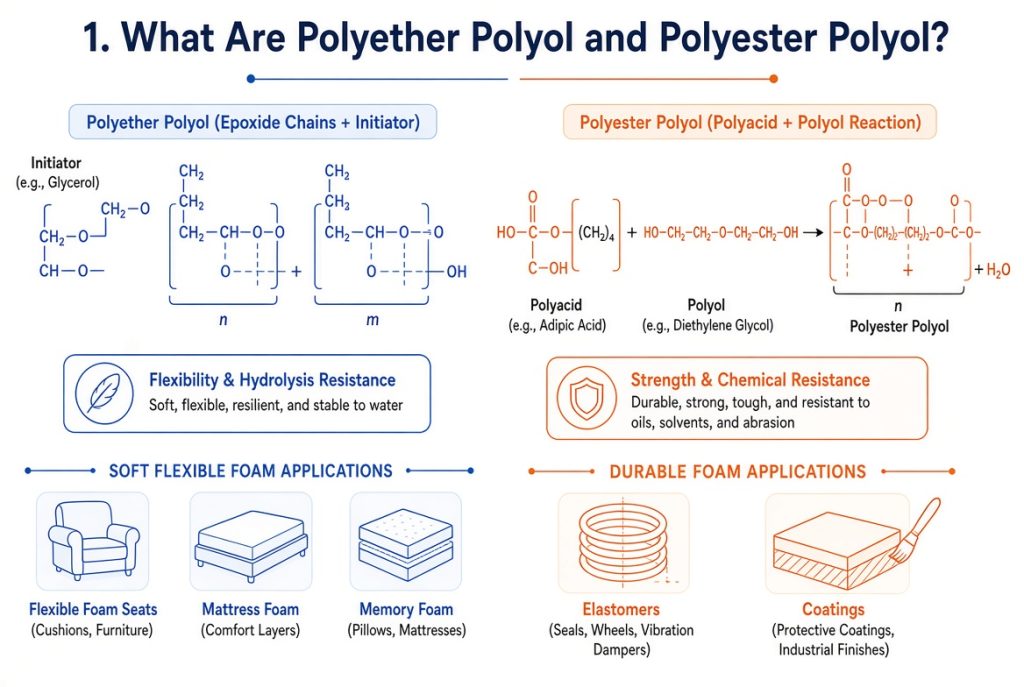
Both polyether polyol and polyester polyol are important raw materials used to produce polyurethane.
Polyether Polyol
Polyether polyol is produced by reacting epoxides such as propylene oxide or ethylene oxide with initiators.
It is widely used in:
- Flexible foam
- High-resilience foam
- Memory foam
- Automotive seats
- Furniture cushions
- Mattress products
Its molecular structure generally provides good flexibility, hydrolysis resistance and processing stability.
Polyester Polyol
Polyester polyol is produced through the reaction of polyacids and polyols.
Compared with polyether polyol, polyester polyol generally offers better:
- Mechanical strength
- Abrasion resistance
- Oil and solvent resistance
- Adhesion
- Heat resistance
It is commonly found in applications requiring higher durability or chemical resistance.
In simple terms:
Polyether polyol is often chosen for flexibility and processing performance, while polyester polyol is often selected when strength, durability or chemical resistance is more important.
2. Why Does the Choice Matter?
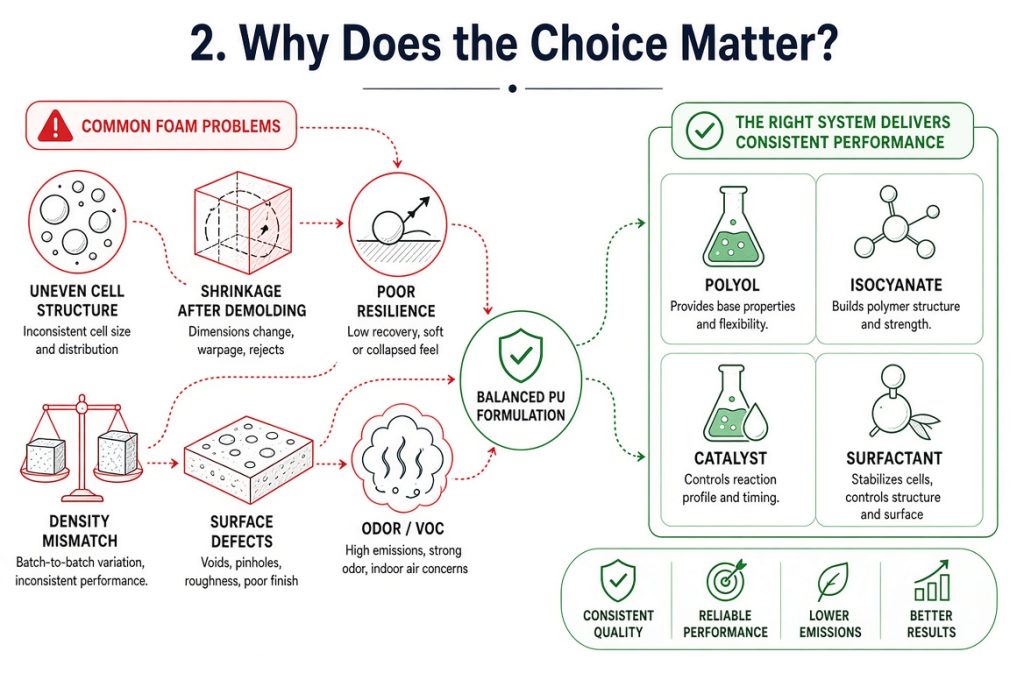
Choosing the wrong polyol can affect the entire foaming process.
A PU manufacturer may experience:
- Foam density not meeting requirements
- Poor resilience
- Uneven cell structure
- Shrinkage after demolding
- Slow or unstable reaction
- Poor surface quality
- Insufficient mechanical strength
- Odor or VOC concerns
- Poor hydrolysis resistance
The challenge is that polyol selection cannot be separated from the complete PU formulation.
Isocyanate, catalyst, silicone surfactant, blowing agent, additives, water and other components must work together.
That is why simply replacing one polyol with another does not always produce the expected result.
3. How Do They Work in PU Foaming?
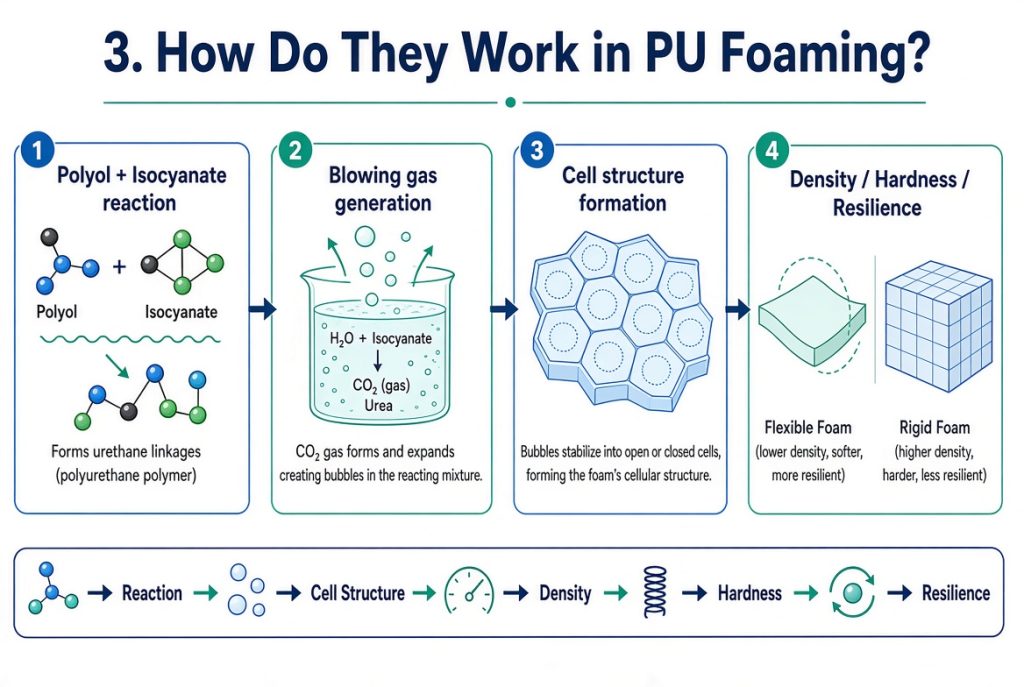
During polyurethane production, polyol reacts with isocyanate to form polyurethane.
At the same time, the blowing reaction generates gas, creating the cellular structure of the foam.
The polyol influences several important characteristics:
Reaction → Cell Structure → Density → Hardness → Resilience → Final Performance
For example, in flexible foam, polyether polyol can provide the flexibility and resilience required for comfortable cushioning.
In applications requiring stronger mechanical performance or better resistance to oils and solvents, polyester polyol may provide advantages.
But the final performance depends on the entire formulation balance, not just the type of polyol.
4. Common Problems When Choosing Polyols
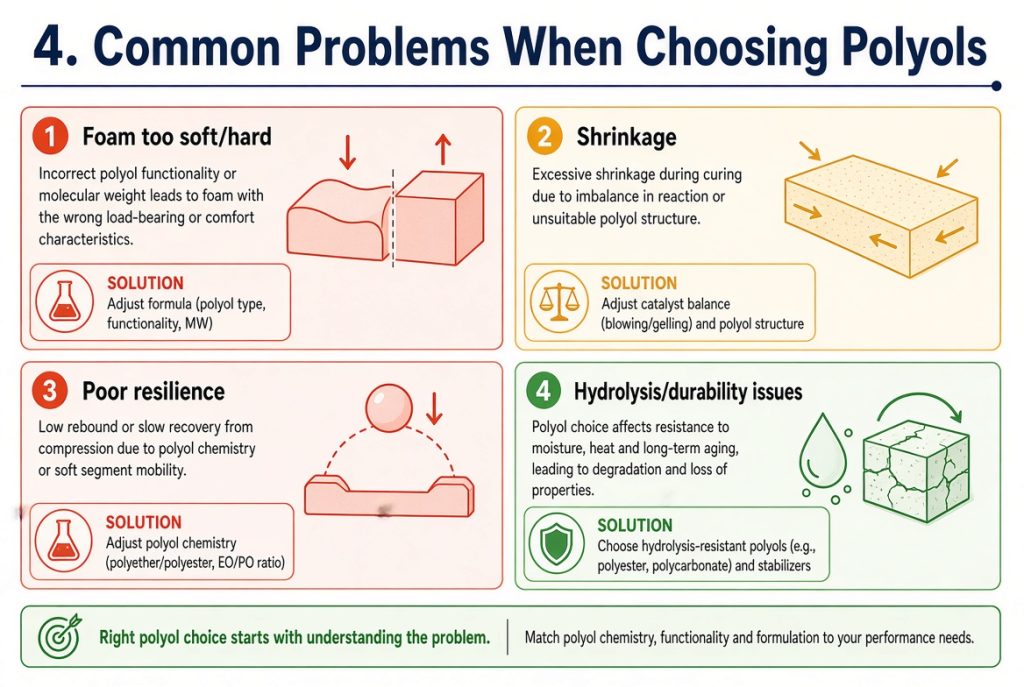
Problem 1: The foam is too soft or too hard
The selected polyol may not match the target hardness, density or application.
Solution:
Adjust the polyol combination, isocyanate index, crosslinking components and formulation ratio rather than changing only one raw material.
Problem 2: Foam shrinkage
Shrinkage can be related to cell structure, reaction balance, blowing level and formulation compatibility.
Solution:
Optimize catalyst balance, silicone surfactant, blowing system and polymer structure.
Problem 3: Poor resilience
For high-resilience foam, simply increasing polyol content does not guarantee better rebound.
Solution:
Optimize polyol type, polymer polyol/POP ratio, catalyst system and crosslinking balance.
Problem 4: Hydrolysis or durability problems
Some applications require long-term resistance to moisture, heat, oils or chemicals.
Solution:
Select the appropriate polyol chemistry according to the working environment and combine it with a suitable PU formulation.
5. Polyether Polyol vs Polyester Polyol: Which One Is Better?
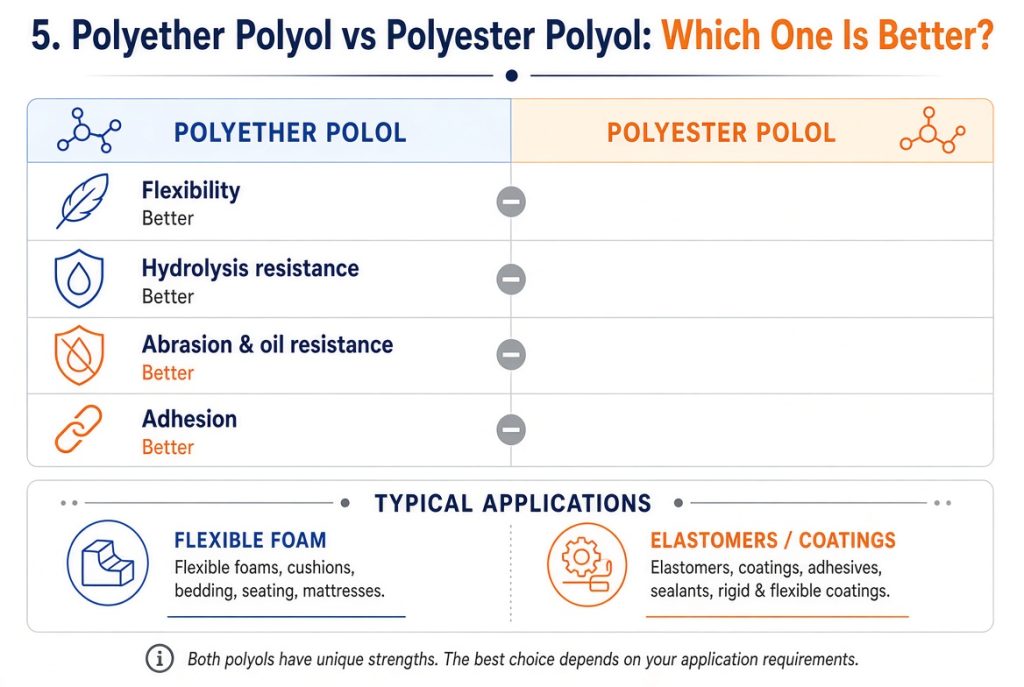
There is no universal winner.
| Property | Polyether Polyol | Polyester Polyol |
| Flexibility | Excellent | Good |
| Hydrolysis Resistance | Generally better | Generally lower |
| Abrasion Resistance | Good | Excellent |
| Oil/Solvent Resistance | Good | Excellent |
| Resilience | Excellent for many flexible foam systems | Application dependent |
| Adhesion | Good | Excellent |
| Typical Applications | Flexible foam, HR foam, memory foam | Elastomers, coatings, adhesives, specialty foams |
The better choice depends on the product, processing equipment, target physical properties and production conditions.
6. How Can GST Help?
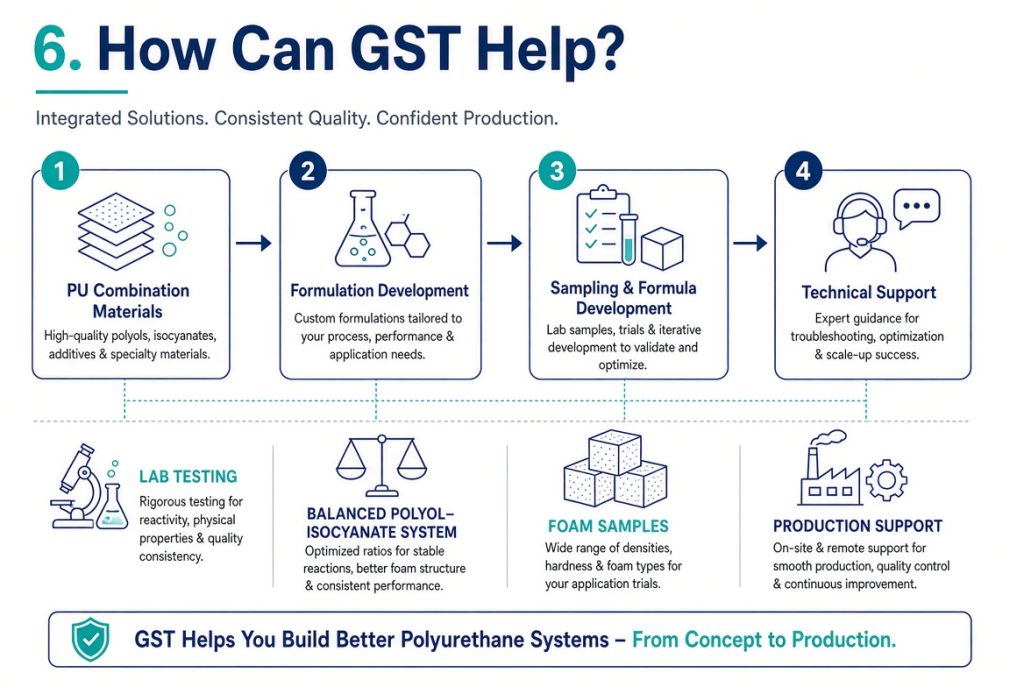
Choosing raw materials is only the first step.
As a polyurethane combination material supplier and application solution provider, GST focuses on the complete formulation and production process.
① PU Combination Materials
GST can provide customized PU systems based on different applications, including:
- Flexible foam systems
- High-resilience foam systems
- Memory foam systems
- Rigid foam systems
- Gel systems
- Bio-based PU systems
- Specialty PU systems
Instead of supplying isolated raw materials, GST can develop a balanced combination material system according to the customer’s requirements.
② Formulation Development
Different factories may use different machines, molds, raw materials and production environments.
GST’s R&D team can adjust:
Polyol + Isocyanate + Catalyst + Silicone + Blowing System + Additives
to achieve the required:
- Density
- Hardness
- Resilience
- Cell structure
- Reaction profile
- Compression performance
- Surface quality
③ Sampling & Formula Development
Before mass production, GST can support:
Requirement → Laboratory Testing → Sample → Formula Adjustment → Production Trial
This helps customers reduce trial-and-error costs and shorten development time.
④ Technical Support
When problems occur during production, the solution is not always “change the raw material.”
GST can help analyze:
Raw Materials + Formula + Equipment + Mold + Temperature + Mixing + Production Process
and identify the real cause.
Conclusion
Polyether polyol vs polyester polyol is not simply a question of which one is better.
The real question is:
Which polyol chemistry is right for your product and production process?
From raw material selection to formulation development and production troubleshooting, the right PU system can make a significant difference in foam quality, production stability and final product performance.
GST provides PU combination materials, customized formulations, laboratory sampling and technical solutions for polyurethane manufacturers worldwide.
Need help selecting the right PU system? Contact GST for a formulation discussion and sample support.
PREVIOUS:What Is Polyester Polyol?
CATEGORIES
LATEST NEWS
- Polyether Polyol vs Polyest...
- What Is Polyester Polyol?
- What Is Polyether Polyol?
- What Is Polyol?
- Why Is Reaction Balance Cri...
- Blowing Reaction vs Gelling...
- How Molecular Structure Det...
- Soft Segment vs Hard Segmen...
- What Is Crosslinking in Pol...
- What Is Polyurethane Polyme...
CONTACT US
Tel:+86 18688691634
Email:sam@1688pu.com
Add:No. 91 Central East Rd, Luxi Village, Gaobu Town, Dongguan 523283, China.