Polytrimethylene Ether Glycol
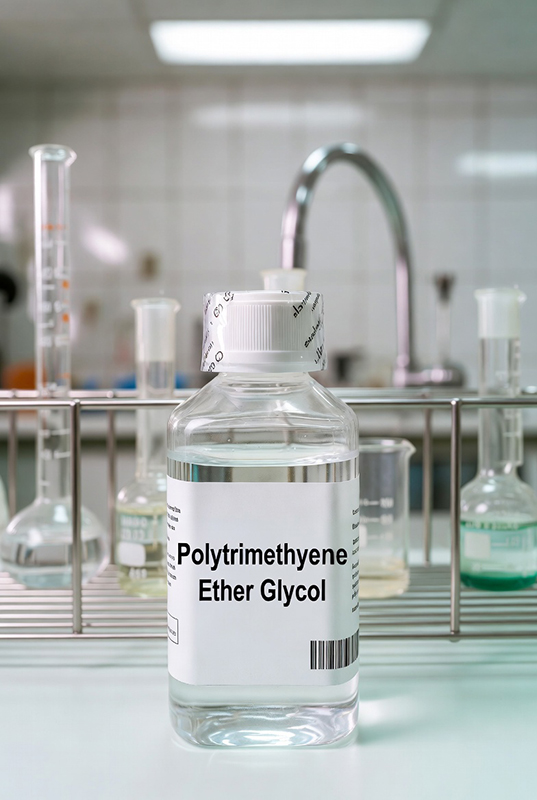
Polytrimethylene ether glycol is a special type of polypropylene ether glycol. It is somewhat similar to the common polypropylene glycol (PPG) in terms of isomerism, but the difference lies in their synthesis. PPG is obtained by the ring-opening polymerization of propylene oxide, containing side methyl groups and terminal secondary hydroxyl groups; polytrimethylene ether glycol is a linear high-performance polyether diol obtained by the polymerization of 1,3-propanediol. Structurally, it is similar to polytetrahydrofuran diol, with highly reactive primary hydroxyl groups at the ends.
Structural formula: HO[CH2CH2CH2O]nH
In recent years, DuPont has industrialized this new polyether diol. The company produces 1,3-propanediol from corn through biotechnology, and then synthesizes polytrimethylene ether glycol through a one-step polycondensation process. The product is branded as Cerenol, specifically the Cerenol H series homopolymer. It is reportedly made from 100% renewable resources, with low energy consumption, low toxicity, and biodegradability.
The Cerenol H series polytrimethylene ether glycol has similar heat and oxidation resistance to PTMEG. It is a liquid amorphous phase with low viscosity, making it easy to handle. Even at low temperatures of -5°C, its crystallization rate is slower than that of PTMEG. DuPont has used this polyether diol to produce polyurethane enamels, which reportedly exhibit excellent durability, gloss, and color retention. Using a small amount of Cerenol polyether diol in automotive primer and clear coat formulations can improve flexibility and chip resistance.
DuPont also produces a copolymer diol of tetrahydrofuran and 1,3-propanediol, the Cerenol G series. The specific product varieties are unknown, but it is reported that renewable resources account for 70% to 80% of its composition.
PREVIOUS:Tetrahydrofuran Copolymer Diol
CATEGORIES
LATEST NEWS
- Polyether Polyol vs Polyest...
- What Is Polyester Polyol?
- What Is Polyether Polyol?
- What Is Polyol?
- Why Is Reaction Balance Cri...
- Blowing Reaction vs Gelling...
- How Molecular Structure Det...
- Soft Segment vs Hard Segmen...
- What Is Crosslinking in Pol...
- What Is Polyurethane Polyme...
CONTACT US
Tel:+86 18688691634
Email:sam@1688pu.com
Add:No. 91 Central East Rd, Luxi Village, Gaobu Town, Dongguan 523283, China.